
Softball drill
Inside-outside tee drill
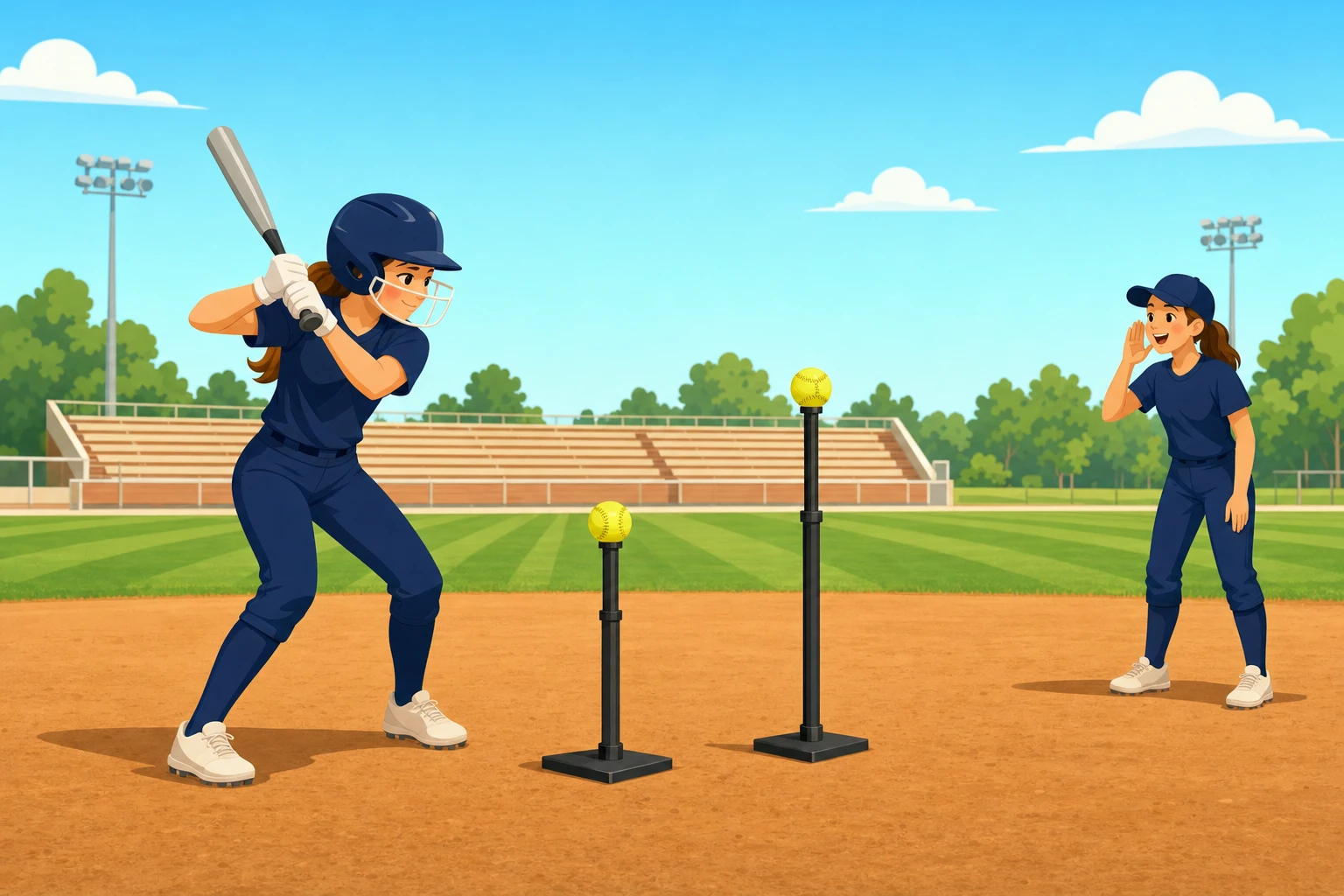
Two tees stand in a line straight out from the hitter: a short tee close in and a tall tee directly behind it. The hitter has to reach the near ball with a short, compact swing and the far ball with full extension, without touching the other tee.
At a glance
- Sport
- Baseball and Softball
- Skill
- Hitting
- Ages
- 10U to High school
- Players
- 2 (a hitter and a partner who calls)
- Time
- About 10 minutes
- Level
- Intermediate
- Equipment
- Two batting tees, A bucket of balls, Bat and helmet, A hitting net or cage
- Indoors
- Yes
An inside pitch has to be met with the hands close to the body and a short, quick path, and an outside pitch needs the arms to extend through the ball. Many hitters only have one swing, so they get jammed on one pitch and roll over or reach for the other.
This drill puts both pitches in front of the hitter at once. A short tee sits close in, and a tall tee stands directly behind it, farther from the hitter. A compact swing hits the near ball and finishes before the tall tee; a full swing hits the far ball and passes over the short one. A partner's call during the load decides which swing comes, so the hitter has to start every swing the same way. It needs no home plate and runs in a cage, a gym or on the field.
Setup
- Set the two tees in one straight line running out from where the hitter stands, the way the hitter's chest faces. No home plate is needed.
- The short tee goes close in, set low, where a compact swing meets the ball with the hands near the body.
- The tall tee goes directly behind the short tee in the same line, farther from the hitter and set higher, where a full swing with the arms extended meets the ball.
- Put a ball on each tee. The partner stands well off to the side, out of the swing's path, where the hitter can hear them.
How to run it
- The hitter takes their stance facing the line of tees and pauses as if waiting for a pitch.
- They start their normal load and stride.
- During the load, the partner calls "in", "out" or stays silent.
- On "in", the hitter keeps the hands in and hits the near ball off the short tee with a short, compact swing, without touching the tall tee behind it.
- On "out", the hitter extends the arms and hits the far ball off the tall tee, the bat passing over the short tee without touching it.
- On silence, they finish the stride, stay balanced with the hands back and do not swing. Reset any ball that was hit and go again.
Coaching points
- The load looks the same every rep, whatever the call. Only the swing changes.
- On the near ball, the hands stay inside and the barrel stays short; the finish should stop before the tall tee.
- On the far ball, let the arms extend through contact instead of reaching early with the hands.
- A touched or knocked tee tells the hitter which swing went wrong, so ask them what happened before the next rep.
- Make the call during the load, not before it starts. Move it later as the hitter improves.
Common mistakes
- Guessing and starting the swing before the call.
- Casting the hands away from the body on the near ball, which clips the tall tee.
- Cutting the swing short on the far ball and dragging the bat through the short tee.
- Lunging forward on a silent call.
- Setting the tees too close together, so neither swing has room to work.
Printable drill card
Take this drill to the field: the setup, steps, coaching points and equipment on one card, with the video's address to find it again. Free, no account needed.
Print the drill cardSmaller: half page or quarter page (PDF).
By age
10U and 12U
Space the tees a little farther apart, call early in the load, and start with only "in" and "out" before adding the silent take.
14U and up
Bring the tees closer together so the swings have to be precise, call as late as the hitter can handle, and keep score of clean reps in a round of 10.
Next: Free lineup card generator.
Frequently Asked Questions
Why is the tall tee behind the short one?
The near, low ball is the pitch you hit with short arms, and the far, high ball is the pitch you hit with full extension. Lining them up makes the hitter control the swing path: the wrong swing hits the other tee.
Do I need a home plate for this drill?
No. The two tees and where the hitter stands are all the drill needs, so it works anywhere you can set up a net.
More drills
Start free. Upgrade when your season needs it.
The free plan includes one team and one of each document type, with no license fee and no credit card. Paid plans start at $2.50 a month billed annually, cancel anytime.
No credit card required. Free plan available.