
Baseball drill
Open window home to first drill
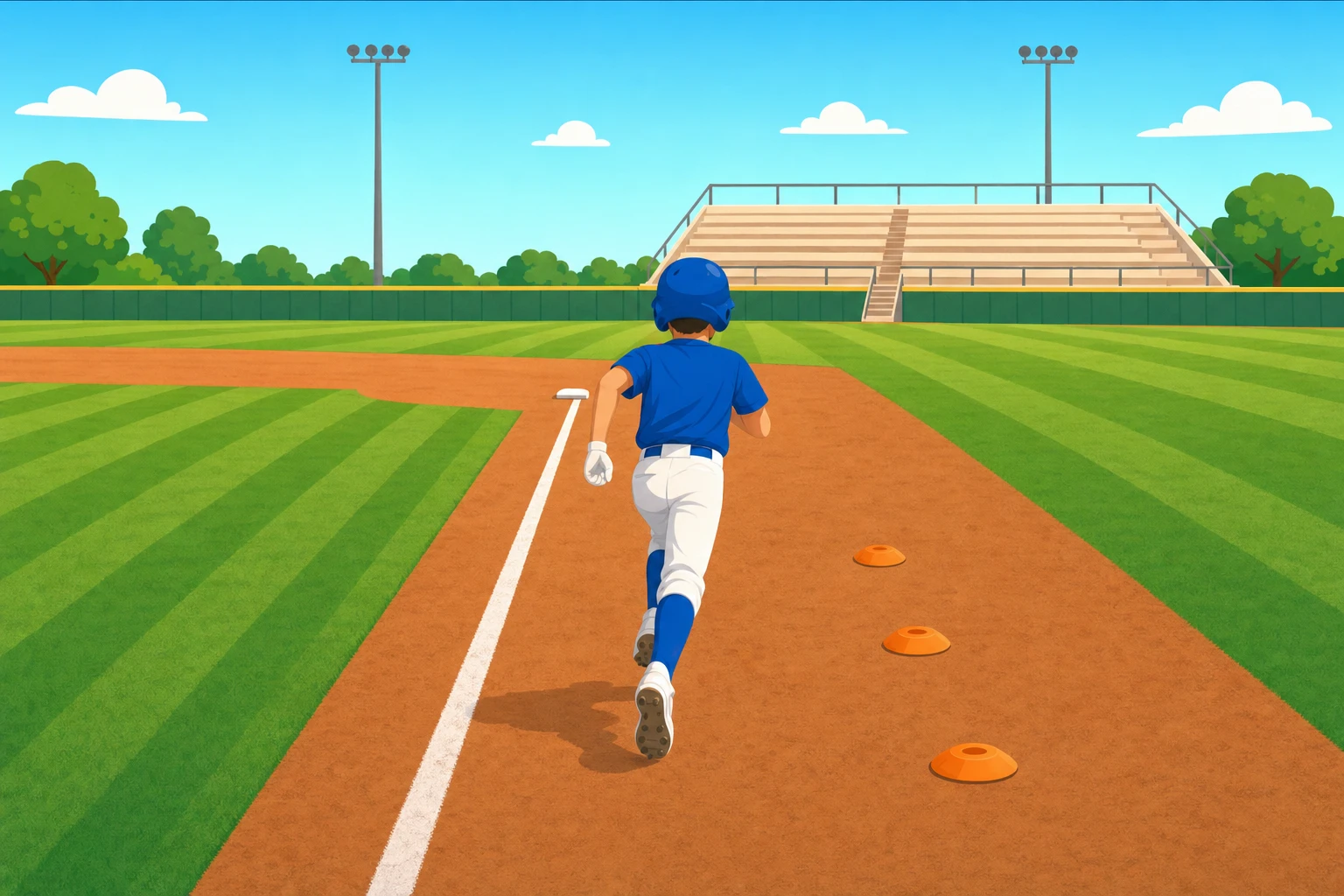
Batters swing and drive out of the box with the head down, then take one quick look at the ball when they reach a row of cones down the first base line. It stops runners from watching their hit and helps them decide earlier whether to turn.
At a glance
- Sport
- Baseball and Softball
- Skill
- Baserunning
- Ages
- 10U to High school
- Players
- 1 to 6, one runner at a time
- Time
- About 10 minutes
- Level
- Beginner
- Equipment
- Home plate or a marked batter's box, 3 to 5 flat cones, First base or a marker
- Indoors
- Yes
A hitter who stands and admires the ball, or turns the head to follow it on every step, loses ground out of the box. The open window drill gives the runner a rule: the first steps are for running, and there is one place to look. A short row of cones down the line marks that place, the window.
The look matters because it tells the runner what to do next. A ground ball in the infield means run straight through first; a ball through to the outfield means start the turn. Getting that read a few steps out of the box, instead of at the bag, is what lets a runner take a good turn. The drill fits in a gym or on a turf strip as well as on a field.
Setup
- Mark home plate and lay a line of 3 to 4 flat cones in foul territory a step or two outside the first base line, starting about 5 yards from the plate, so the runner runs between the line and the cones. That stretch is the window.
- Put first base, or a marker, at your field's distance.
- Hitters line up behind the plate and take turns. A coach stands in the infield to show where the ball went.
How to run it
- The hitter takes a swing, with no ball or off a tee, and finishes balanced.
- The hitter drives out of the box for the first three steps with the chin down and the eyes on the base path.
- At the window, the runner turns the head, not the shoulders, for one quick look at the field.
- The coach shows a ground ball in the infield or a ball through to the outfield, by pointing or rolling a ball.
- The runner reacts: straight through the bag for the infield ball, or a wider path and a turn for the outfield ball. Then the runner walks back and the next hitter goes.
Coaching points
- Head down out of the box. Looking up on the first step slows the whole run.
- One look, not a stare. A quick glance in the window is all the runner needs.
- Turn the chin, keep the chest pointed down the line. The body keeps running while the eyes check the ball.
- Drive the arms hard on the first three steps.
- Decide at the window. Waiting until the base to decide makes for a poor turn.
Common mistakes
- Watching the ball off the bat before taking a step.
- Slowing down during the look. Have a coach stand at the window and call out anyone who brakes.
- Turning the whole upper body toward the infield, which pulls the runner off the line.
- Looking more than once, or not looking at all and missing the chance to turn.
Printable drill card
Take this drill to the field: the setup, steps, coaching points and equipment on one card, with the video's address to find it again. Free, no account needed.
Print the drill cardSmaller: half page or quarter page (PDF).
By age
10U and 12U
Put the window a little closer to the plate, about 4 to 5 yards, to fit shorter strides, and keep the read simple: infield or outfield.
14U and up
Move the window out to 6 to 8 yards and have a coach roll or toss real balls into the infield or outfield after the swing, so the runner reads a live ball.
Next: Free wristband generator.
Frequently Asked Questions
Why shouldn't a batter watch the ball right after contact?
Every step spent watching is a slower step toward first. A runner who gets out of the box first and looks once a few steps down the line still sees where the ball went, in time to decide whether to turn.
More drills
Start free. Upgrade when your season needs it.
The free plan includes one team and one of each document type, with no license fee and no credit card. Paid plans start at $2.50 a month billed annually, cancel anytime.
No credit card required. Free plan available.