
Softball drill
Rapid-fire bunting line drill
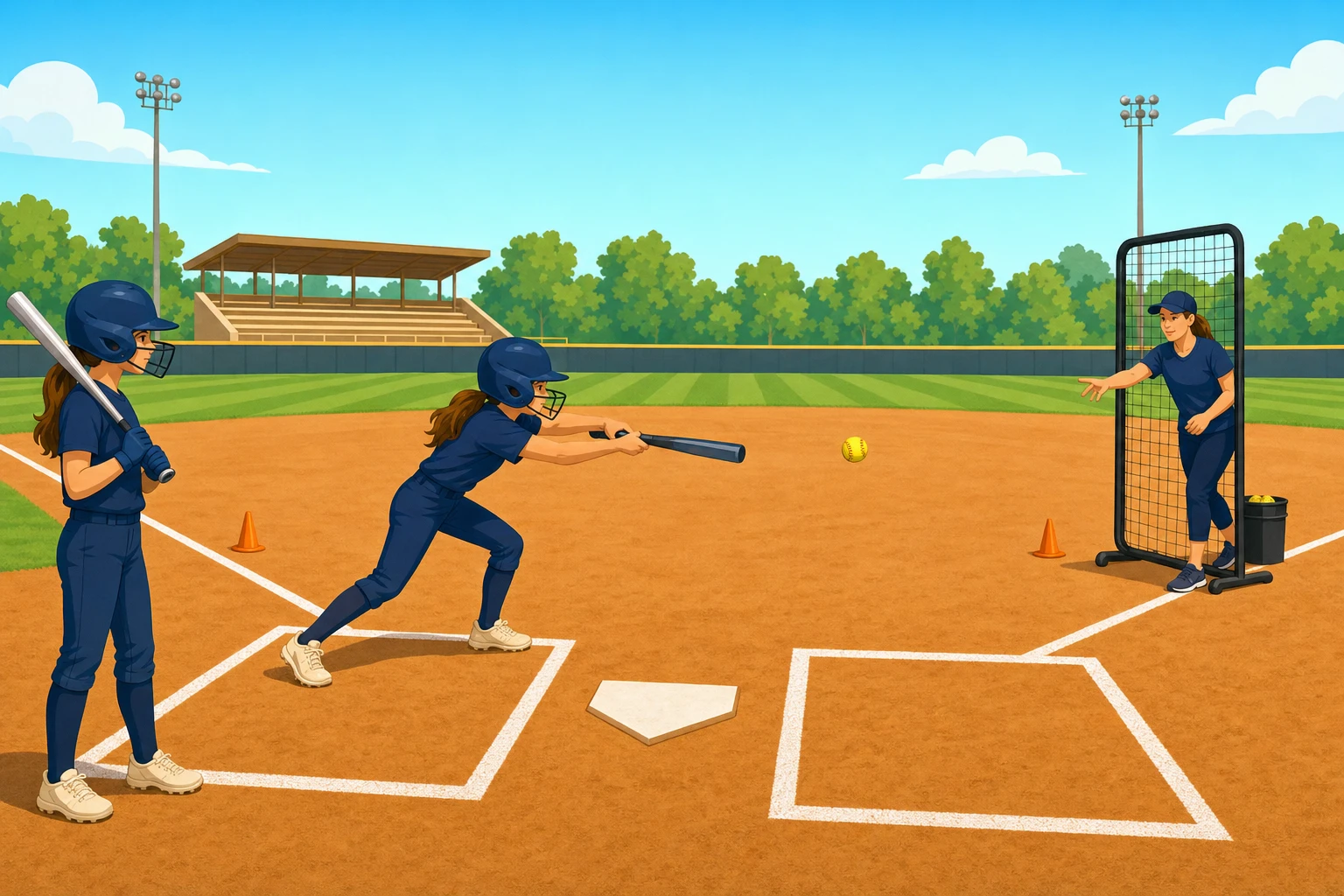
A line of hitters takes one bunt each off a feeder's toss, aims it at cones along the lines, and goes straight to the back of the line as the next hitter steps in. It packs a lot of bunts into a few minutes and makes hitters set up quickly.
At a glance
- Sport
- Baseball and Softball
- Skill
- Bunting
- Ages
- 10U to High school
- Players
- 4 to 8 hitters and a feeder
- Time
- About 10 minutes
- Level
- Intermediate
- Equipment
- Bats and batting helmets, A bucket of balls, Cones for target zones, A protective screen
- Indoors
- Needs a field
In a game, a hitter gets one chance to put a bunt down, often with no warm-up swing. This drill gives each player one pitch at a time, then sends them to the back of the line, so every bunt has to count and every hitter has to get set fast.
Because the next hitter steps in right away, the drill moves quickly and the team gets a lot of bunts in a short block. It works well as a station or as a team challenge at the end of practice: set a number of good bunts in a row and keep going until the group gets there.
Setup
- Place cones in fair territory to mark target zones a short way up both foul lines.
- Put a feeder behind a screen about 20 to 30 feet in front of the plate with a full bucket.
- Line up four to eight hitters with helmets and bats behind the plate, a safe distance from the box.
How to run it
- The first hitter steps into the box and gets set to bunt.
- The feeder throws a strike. The hitter bunts toward the target zone on the side the coach called.
- As soon as the ball is down, the hitter clears the box and goes to the back of the line.
- The next hitter steps in and gets set while the feeder reloads, and the feeder throws again.
- The group counts good bunts out loud. Keep going until the group reaches its goal or time runs out.
Coaching points
- Quick to the box, not quick with the bunt. Hitters hurry to get set, then bunt with the same care as always.
- Bat at the top of the zone and work down to the ball.
- Bend the knees for low pitches instead of dropping the barrel.
- Catch the ball with the bat. Soft hands keep it in the target zone.
- Keep the line safely back from the box and the hitter who just bunted out of the way of the next pitch.
Common mistakes
- Rushing the bunt itself because the line is moving fast.
- Stabbing at the ball with stiff arms, which sends it hard to a fielder.
- Crowding the plate with the line, which is a safety problem with a bat swinging around.
Printable drill card
Take this drill to the field: the setup, steps, coaching points and equipment on one card, with the video's address to find it again. Free, no account needed.
Print the drill cardSmaller: half page or quarter page (PDF).
By age
10U and 12U
Slow the pace down so younger hitters have time to get their feet and hands right, and set an easy group goal.
14U and up
Throw firmer, call a different bunt for each hitter (sacrifice, drag, push or squeeze), and make the goal a number of good bunts in a row.
Next: Free lineup card generator.
Frequently Asked Questions
How do you keep a fast bunting line safe?
Keep the waiting line well behind the plate, have hitters wear helmets, keep the feeder behind a screen, and make the hitter who just bunted walk out the side away from the plate before the next pitch.
More drills
Start free. Upgrade when your season needs it.
The free plan includes one team and one of each document type, with no license fee and no credit card. Paid plans start at $2.50 a month billed annually, cancel anytime.
No credit card required. Free plan available.