
Baseball & Softball Coaching Documents
Printable Pitching Charts for Baseball & Softball
Track pitch sequences, hitter outcomes, and fielded-ball locations on a printable chart designed for in-game pitching notes.
No credit card required. Free plan available.

Track pitches from the dugout like a boss
Pick one of 2 ready-made templates and download a print-ready PDF, or share a link with your coaching staff.
Fully Customizable
Click on any image to preview


Built for game day
Pitch-by-pitch tracking. Log each pitch as the at-bat unfolds
Hitter outcome boxes. Record how each at-bat ended without breaking your flow
Pitch location reference. Mark where the ball was hit or where the pitch landed
Game note workspace. Capture extra scouting notes right on the same chart
2 ready-made templates included
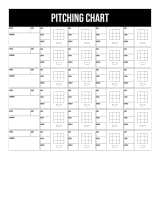
Standard Pitching ChartA standard pitching chart 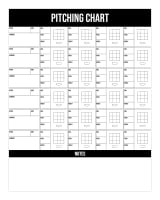
Pitching Chart with Notes SectionA pitching chart with an added notes section


How to chart pitches during a game
Whoever keeps the chart logs every pitch, so the pitcher and the coach can see after the game what worked and what did not.
- Before the game, choose four or five pitch blocks per row and how many rows go on a page. Add the wristband card if you call pitches by number.
- Start a row for each plate appearance with the hitter and the side they bat from.
- For every pitch, mark its location in the strike zone and write the call, the pitch thrown and what happened.
- When the at-bat ends, record the result, and where the ball went if it was put in play.
- After the game, use the notes section for the post-game review and the plan for the next start.
More documents to go with your pitching charts
Score Sheets
A detailed, traditional baseball score sheet for tracking every at-bat, pitch, and play. Keep the official book and produce beautiful game summaries.
Full play-by-play scoring. Record every at-bat in traditional scorekeeping notation
Game summary totals. Roll up the box score automatically from the sheet
Archive-quality format. Produce a record worth keeping in the team scorebook
Fully customizable. Add your team colors or your team's logo.
- Basic Score Sheet (9 innings/9 hitters)
- Basic Score Sheet (9 innings/15 hitters)
- Score Sheet with Scoring Key
- Score Sheet with Second Page "How to Score Sheet"


Defensive Lineups
Visually arrange your players across all nine positions with drag-and-drop simplicity. Set multiple defensive lineups for different game situations.
Drag-and-drop positioning. Place players directly onto the field diagram
9-position field layout. Cover every defensive position in one clear diagram
Multiple lineup slots. Prepare more than one defensive alignment ahead of time
Player quick-view. See the roster while setting positions
- Blank Defensive Lineup (9 innings/3 Outfielders)
- Blank Defensive Lineup (9 innings/4 Outfielders)
- Defensive Lineup with Batting Order
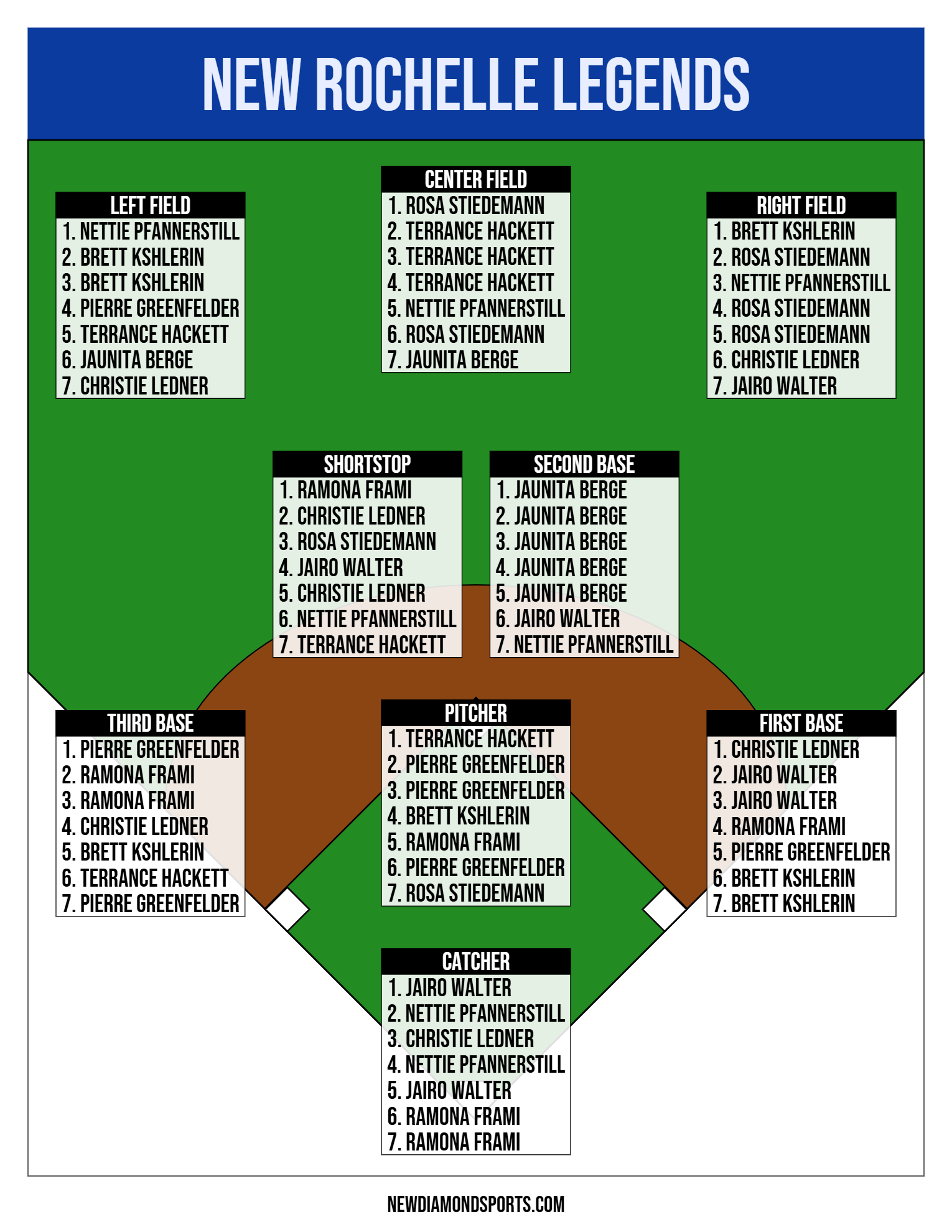


Dugout Cards
A laminate-ready card with the most critical game-day information. Keep both teams' lineup and available players posted in the dugout, or in your back pocket.
Laminate-ready format. Sized and formatted to hold up to a season of dugout use
Everything at a glance. Reference all your relevant game info in one sheet
Customizable. Add your team colors and team logo
Regulation-Ready. Use DP/Flex, multiple players in a lineup slot, DH and EH.
- Standard Dugout Card
- Dugout Card with Roster


Ready in minutes, not hours
Pick a template
Start from a ready-made layout built by coaches, or from a blank one.
Customize it
Make it your own by adding your team colors, team logo and any custom details.
Print or share
Download a print-ready PDF, or share a link with your coaching staff.
Questions coaches ask
What does the pitching chart track?
One row per plate appearance: the hitter, which side they bat from and the result of the at-bat, then a block for every pitch with a strike zone to mark the location, and spaces for the call, the pitch thrown and what happened. Set four or five pitch blocks per row and from three to twenty rows per page; a long game simply runs onto a second page.
Can I print the wristband card on the chart?
Yes. Add a wristband section and pick the set, and the pitch-calling card prints on the same page, so whoever keeps the chart can match the number that was called to the pitch without a second sheet.
Does it work for softball?
Yes. The chart does not assume a sport; it records the call, the pitch, the location and the result, so it keeps a rise ball and a drop the same way it keeps a slider. Set the pitch names on the wristband you use for calling, and chart against those.
What paper and layout does it print on?
Letter or legal, portrait or landscape, with a title bar and an optional notes section for the pitcher’s plan or the post-game review. Legal landscape gives the strike zones the most room when you chart five pitches per row.
Is a pitching chart included in the free plan?
Yes. The free plan keeps one team and one pitching chart, with no credit card and no time limit, and you can print it fresh for every start. Paid plans start at $2.50 a month billed annually and add unlimited documents and team logos.
Start free. Upgrade when your season needs it.
The free plan includes one team and one of each document type, with no license fee and no credit card. Paid plans start at $2.50 a month billed annually, cancel anytime.
No credit card required. Free plan available.