
Glossary
Catcher pickoff
A catcher pickoff is a throw by the catcher, right after the pitch, to a base where a runner has taken too big a lead or turned their back on the play.
After a pitch, runners take a secondary lead: a few shuffle steps off the base to be ready for a passed ball or a ball in play. A catcher pickoff catches the runner who goes too far or relaxes too soon. The catcher receives the pitch and throws straight to the base from the crouch or the knees, and the fielder covering arrives at the same time as the ball.
The play needs a sign because the fielder has to be moving before the throw. At first base the first baseman, playing off the bag, sneaks in behind the runner as the pitch crosses the plate, which is why the throw is often called a back pick. At third the third baseman or the shortstop breaks to the base. The catcher gives the sign, or the coach calls it from the dugout, and the fielder answers it so the catcher knows the base will be covered.
It is a common play in fastpitch softball, where runners can lead only once the ball leaves the pitcher's hand and have to get back quickly, and in youth baseball, where runners cannot leave the base until the pitch reaches the batter and so take big secondary leads. A pitch outside, or a pitchout, gives the catcher a clean throwing lane.
When to call it
- A runner at first who takes a big secondary lead and walks back slowly after every pitch.
- A runner at third who drifts down the line on a pitch the batter takes.
- A first baseman playing well off the bag, who can get behind the runner without being seen.
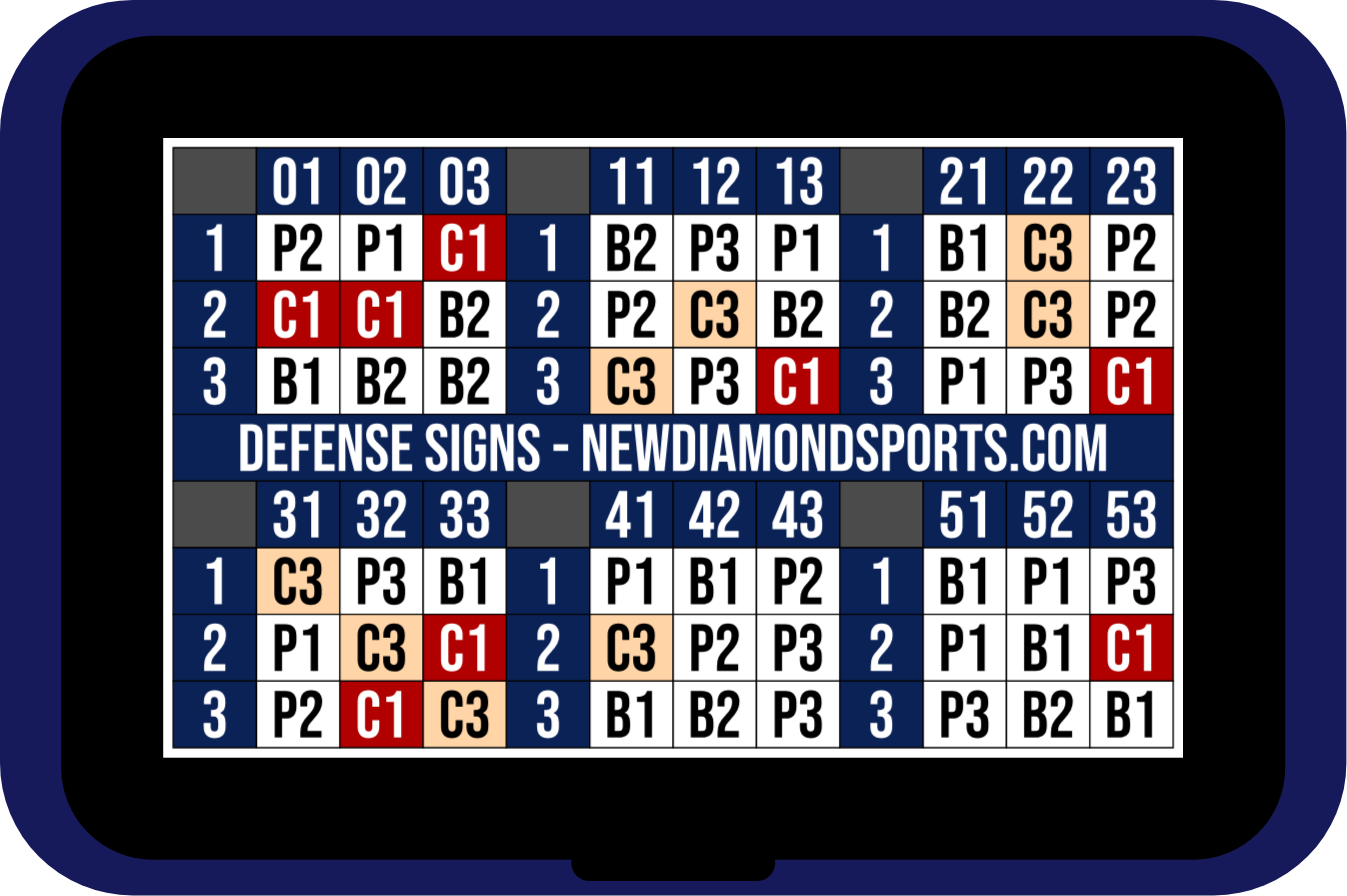
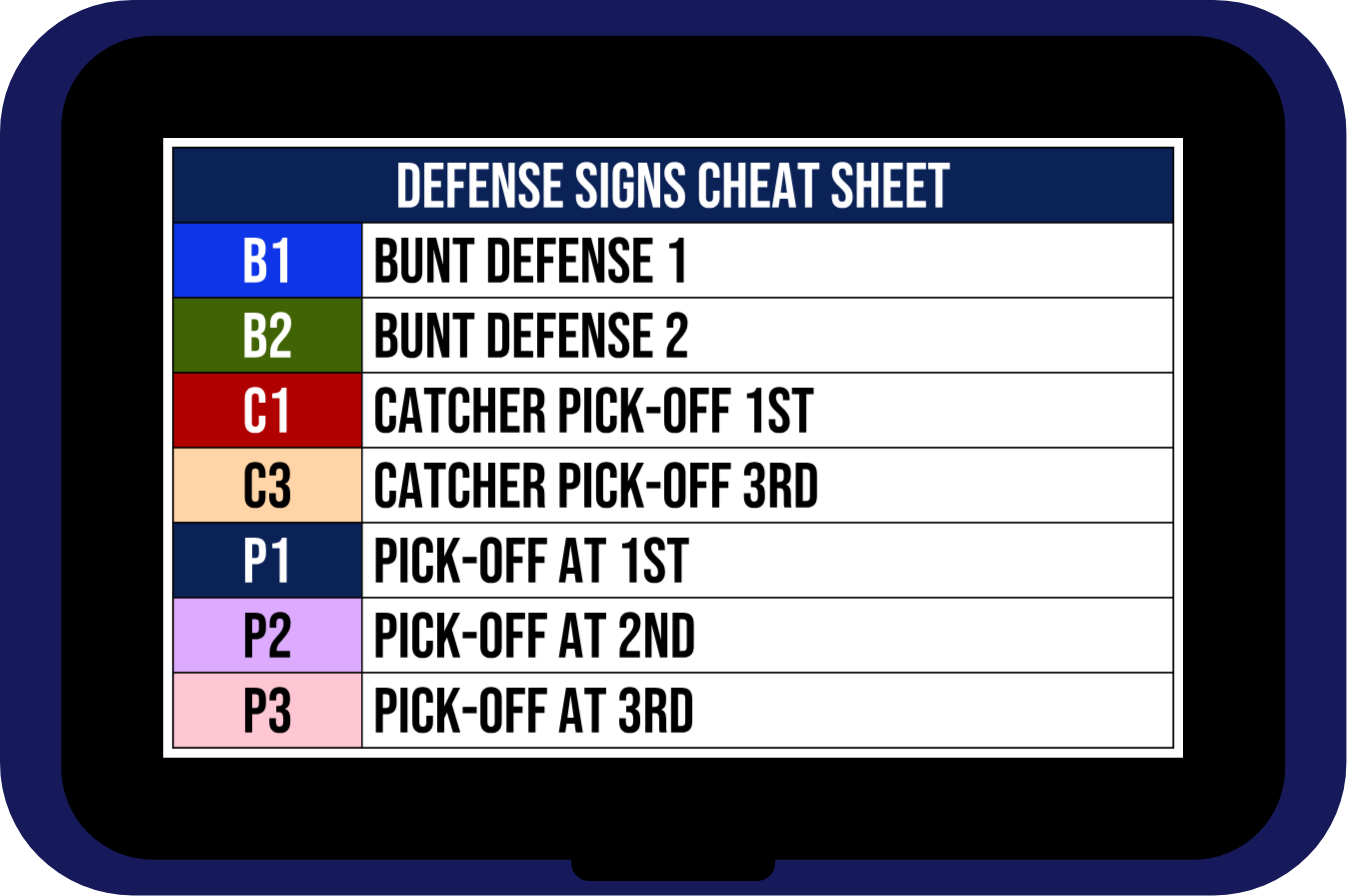
Put it on a card: Baseball and softball signs.
Sample wristband and cheat sheet
Frequently Asked Questions
What is a back pick in softball?
A catcher's throw to first base behind a runner who has taken a lead. The first baseman sneaks to the bag from behind the runner as the pitch is caught, so the runner does not see the play coming.
Who covers the base on a catcher pickoff at first?
Usually the first baseman, who slides back to the bag behind the runner. Some teams have the second baseman cover instead when the first baseman is playing in for a bunt.
More in the glossary
Start free. Upgrade when your season needs it.
The free plan includes one team and one of each document type, with no license fee and no credit card. Paid plans start at $2.50 a month billed annually, cancel anytime.
No credit card required. Free plan available.