
Baseball & Softball Coaching Documents
Baseball and Softball Signs: How They Work and How to Make Your Own
How coaches give signs with hand signals and wristbands, the plays every team has a sign for, what changes in fastpitch, and how to make a set the other dugout can't read.
No credit card required. Free plan available.
What baseball and softball signs are
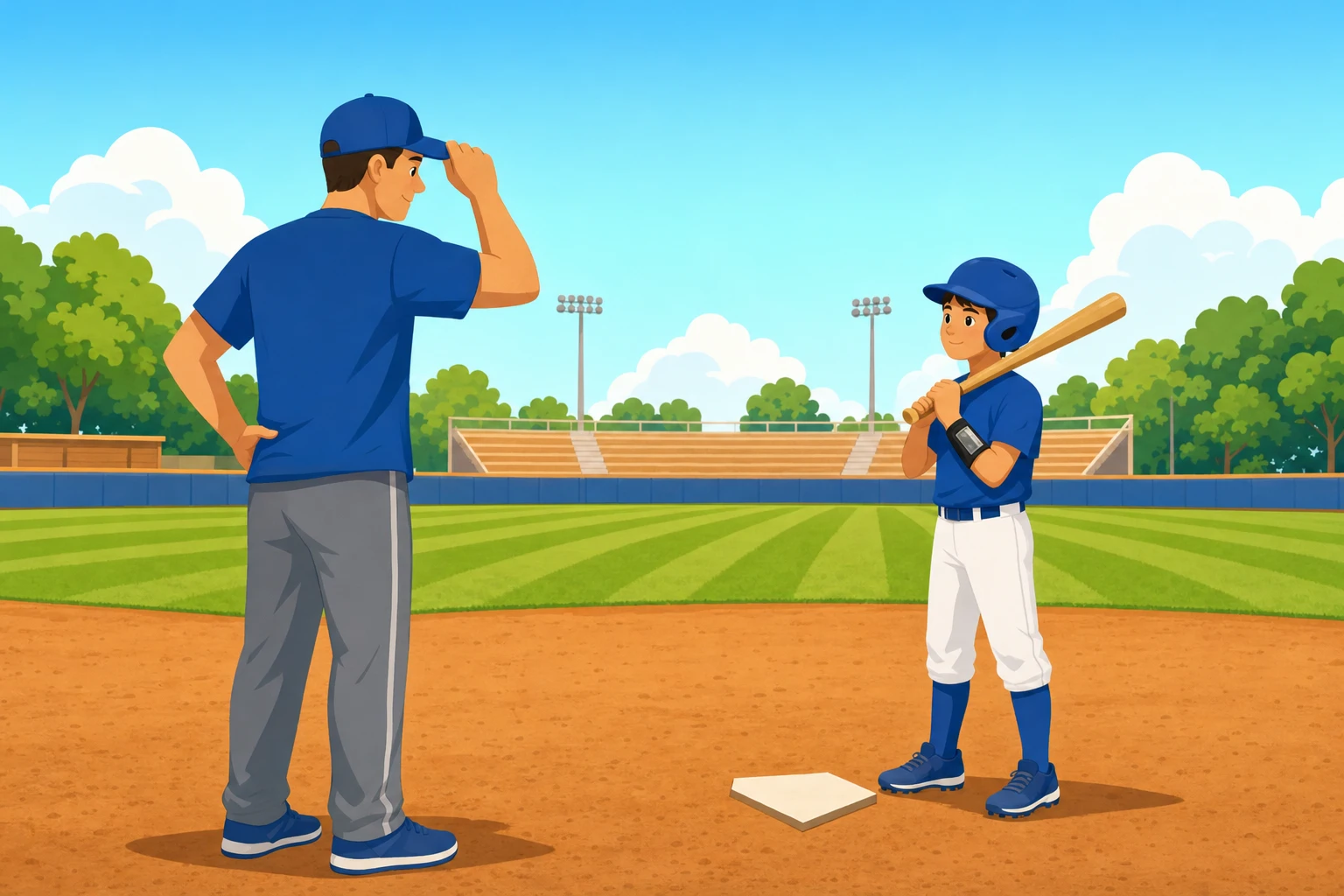
Signs are how a coach tells the batter, the runners and the fielders what is coming without telling the other team: bunt this pitch, steal on the next one, throw a curveball low and away. Every team has them, from tee ball to college, and every team has the same problem with them. The other dugout is watching, and a sign it can read is a play it can stop.
A coach can send a sign three ways: a sequence of hand signals the players have to memorize, an electronic system with a transmitter and earpieces, or a numbered card in a wristband. Most teams still start with hand signals, and most programs that have outgrown them have moved to the wristband.
How hand signals work
A coach in the third base box touches the cap, the arm, the belt and the letters, one after another. Nearly all of it is noise. What makes one touch the real sign is the system the team agreed on before the game:
- Indicator. One set touch, such as the brim of the cap, means the next touch is the sign. Every touch before the indicator is a decoy.
- Wipe-off. A touch, such as a swipe down the arm, that cancels everything before it, so the coach can take a play off or hide the real one in a longer string.
- Hot sign. A touch that is the play every time it is given, with no indicator. Teams often move it each inning.
- Count systems. The play is on when the coach touches the same spot a set number of times, or the sign is the second touch after the indicator, or the number of outs plus one.
- Return sign. The batter or runner answers, with a touch of the helmet for example, so the coach knows the sign was seen before the pitch.
The more steps a system has, the harder it is to steal and the easier it is for a nine-year-old to miss. Youth teams usually keep to an indicator and a wipe-off; older teams add counts and hot signs that change by inning.
Common baseball signs
These are the plays most teams have a sign for. A youth team might use three of them; a high school team uses most.
- Take. Do not swing at the next pitch, whatever it is.
- Sacrifice bunt. Bunt the ball to move a runner up, giving yourself up at first.
- Squeeze. Bunt with a runner on third to score them.
- Steal. The runner takes the next base on the pitch. Delayed and double steals usually have signs of their own.
- Hit and run. The runner goes with the pitch and the batter has to put the ball in play.
- Bunt and run. The same, with a bunt.
- Fake bunt slash. Show bunt to pull the corners in, then pull the bat back and swing.
The defense has signs too. The catcher calls the pitch with pitch signs, fingers for the pitch and a tap of the thigh for the location, and switches to a sequence when a runner on second can see the hand. Infielders and the catcher share pickoff signs, and the coach signals the bunt defense and the steal coverage.
Softball signs: what changes in fastpitch
The system is the same, and so are most of the plays, but a few things change:
- Runners leave on the release. In fastpitch a runner can go as soon as the pitcher lets go of the ball, so steals and delayed steals come more often and the runner has to read the sign before every pitch.
- Slappers. A left-handed slap hitter needs signs of their own: slap, soft slap, bunt or swing away.
- The coach calls the pitches. Most fastpitch catchers take every pitch from the dugout, so a fastpitch team often has more pitch calls than plays, with a location on every one.
All of this means more signs to give, more often, which is why so many softball teams have moved to wristband signs. The full guide to softball wristband signs shows every part of the system, with pictures.
How a wristband sign system works
It has three parts:
- The wristband or arm band the player wears, with a clear pocket.
- The sign card inside the pocket: a numbered grid where every cell is a pitch, a play or a defensive call.
- The coaches sheet: the same signs with their numbers, which is what the coach calls from.
The coach calls a number such as 021. The first two digits pick the column, the third picks the row, and the cell where they meet holds the sign. Every player looks at their own card, so the whole team gets the call at once and nobody on the other bench can decode it without the card.
Coaches switch because:
- Players learn the system once, not a new set of hand signals every season.
- The signs cannot be picked; reshuffle the numbers and the old card is useless.
- A card holds dozens of signs where a hand-signal set holds a handful.
- Pitchers and catchers can share a card, so nothing passes between the mound and the plate.
- Players arriving at the next level already know how the system works.
How to make your own baseball signs
- List the plays you will actually call. Start with the take, the bunt and the steal, and add a play only when your players can run it. A sign nobody remembers is worse than no sign.
- Choose a system. For hand signals, pick an indicator, a wipe-off and one touch per play. For a wristband, pick a grid size and the signs that go in it.
- Write it down. Give every coach the same sheet, and give the players a cheat sheet to learn from.
- Teach it at practice. Run each sign in a live drill, with the return sign, until nobody misses one.
- Change it when it is read. With hand signals, move the indicator. With a wristband, reshuffle the numbers and print new cards.
New Diamond Sports does steps 2 to 5 for wristbands: pick a template, add your signs, and print the cards, the coaches sheet and a cheat sheet for every player. See baseball wristband signs for the baseball templates, or try the free wristband generator for a card this weekend, no account needed.
Make your own wristband signs
Start from a template for your level, add your signs, and print the cards, the coaches sheet and a cheat sheet for every player from one free account.


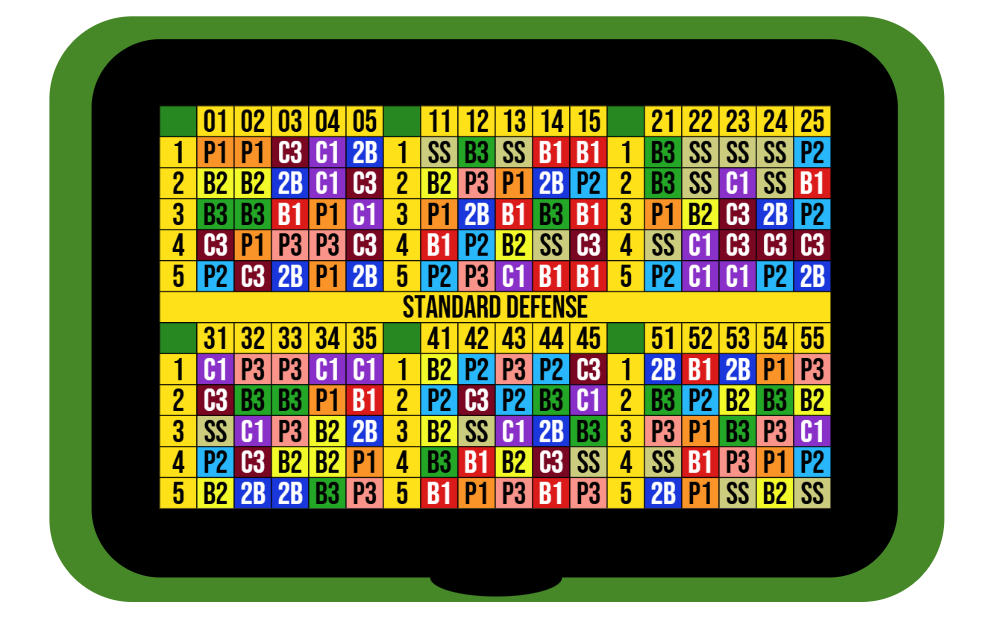


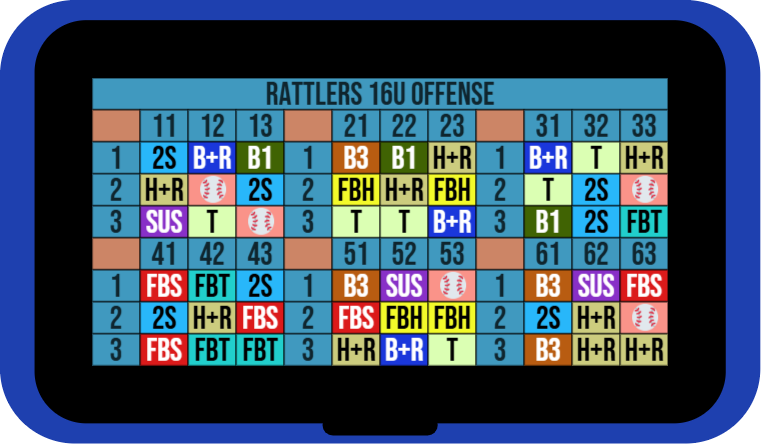


Fully customizable. You determine the number of grids and their dimensions.
Cut-to-fit dimensions. Customize the height and width to fit your team's wristbands.
Personalize. Print your players' names/numbers on their card.
Mobile-friendly. Our software is designed to work on phones, tablets and desktops.
11 ready-made templates included
- Blank
- 12U/14U Offense
- 12U/14U Pitching Baseball
- 12U/14U Pitching Softball
- 16U/18U Offense
- 16U/18U Pitching Baseball
- 16U/18U Pitching Softball
- College Offense
- College Pitching Baseball
- College Pitching Softball
- Standard Defense
No credit card required. Free plan available.
What are the most common baseball signs?
Take, bunt, squeeze, steal, hit and run, and bunt and run on offense; the catcher's pitch signs and pickoff signs on defense. Softball teams add signs for the slapper and call more of their pitches from the dugout.
How do you make baseball signs?
List the plays you will call, choose a system (an indicator, a wipe-off and one touch per play, or a numbered wristband card), write it down for every coach and player, teach it at practice with a return sign, and change it when the other team reads it.
How do I stop the other team from stealing our signs?
Switch from hand signals to a number system on a wristband card. The coach calls a three-digit number, every player reads the sign off their own card, and without the card the number means nothing. Print a new card between games and even a stolen one is useless. New Diamond Sports makes the cards, the coaches sheet and the players' cheat sheets from one set of signs, free to start.
Are wristband signs allowed?
Youth, travel, high school and college programs use them, and NCAA teams have for more than a decade. Check your league's rules if you are unsure; they are a printed card, not an electronic device.
What goes on the card?
Whatever you call: offensive plays, defensive alignments, pitches with locations. Each kind can be its own card in the same wristband.
How long does it take to teach?
One practice. Players learn to find a column and a row; the signs themselves are the abbreviations you already use.
What does the free plan include?
One team, one wristband set with up to a 3 x 3 grid (54 signs), 8 card colors and the preset offensive, defensive and pitching signs, plus one of each other document type. Paid plans start at $2.50 a month billed annually and add bigger grids, custom signs and unlimited documents.