
Softball drill
Pop time beat-the-clock drill
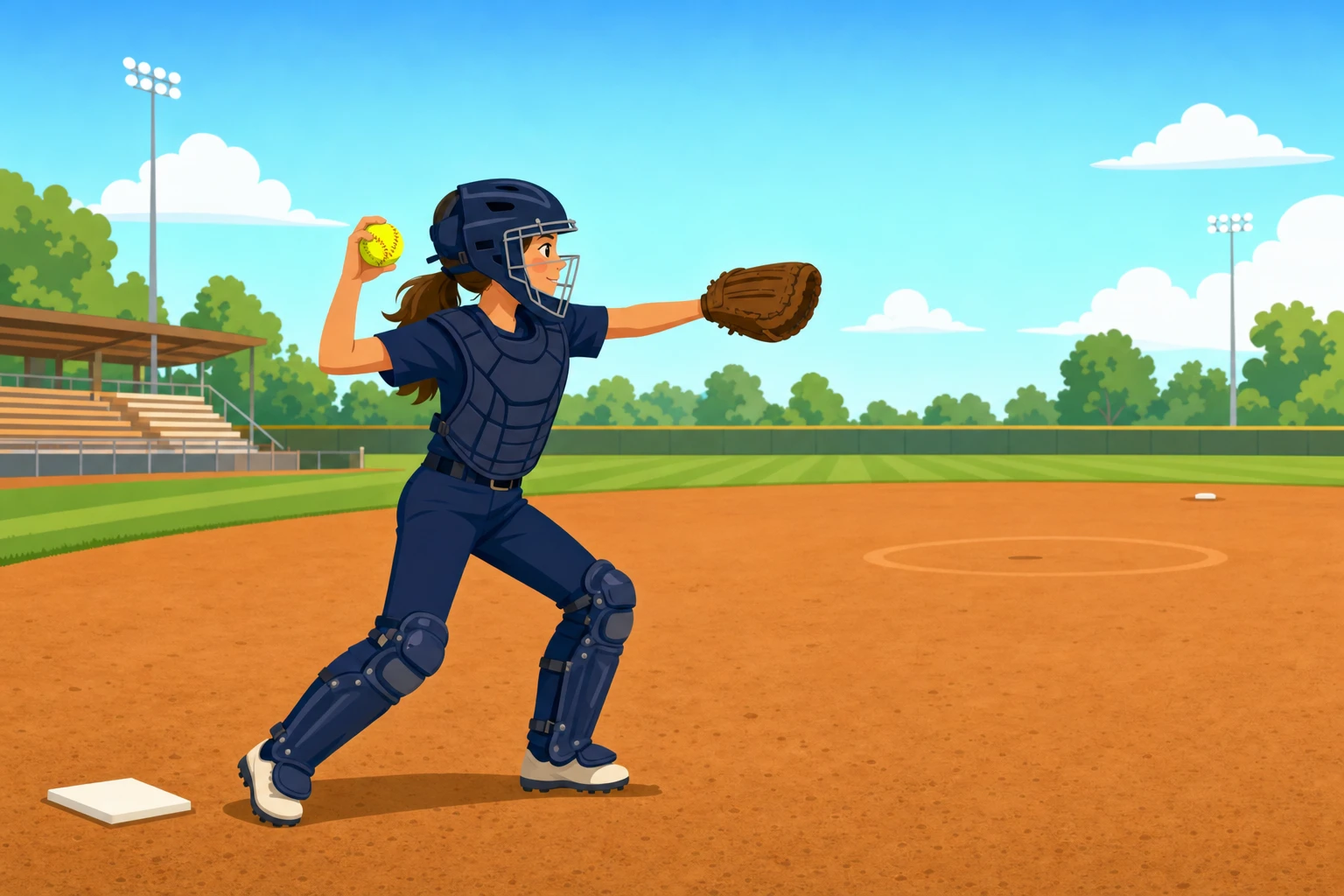
A machine or coach throws a pitch, a horn sounds a set time later, and the catcher has to catch, throw to second and get the tag down before the horn. It puts game speed and a clear target on the throw-down to second.
At a glance
- Sport
- Baseball and Softball
- Skill
- Catchers
- Ages
- 12U to High school
- Players
- 2 to 4 catchers, a feeder and a fielder at second
- Time
- About 12 minutes
- Level
- Advanced
- Equipment
- Full catcher's gear, A bucket of balls, A pitching machine or a coach throwing, A timer with a horn or beep (a phone app works), Second base
- Indoors
- Needs a field
Pop time, from the ball hitting the catcher's mitt to the ball reaching the fielder at second, is how catchers' arms get measured. But a stopwatch reading after the rep does not change how a catcher throws. A horn that goes off while the throw is in the air does, because the catcher and the fielder both hear right away whether they made it.
In this drill the clock starts with the pitch and the horn marks the end of a good steal attempt. The catcher has to catch, get the feet going, make a strong, accurate throw, and the fielder has to catch and tag, all before the horn. It is a good way to end a catchers' session, once the footwork has been worked slowly.
Setup
- The catcher sets up in a runners-on stance behind the plate in full gear.
- A coach throws from the mound, or a pitching machine is set to throw strikes.
- A fielder covers second base, ready to catch and tag.
- Set the timer to start with the pitch and sound after the time you choose for the group.
How to run it
- The feeder throws the pitch and starts the timer at the same moment.
- The catcher receives it, gains ground toward second with quick footwork and throws.
- The fielder at second catches the ball and puts down a tag in front of the bag.
- Everyone listens: a tag before the horn is a made rep, after it is a miss.
- Rotate catchers after each throw so every throw is a fresh, full-effort one. Keep count of made reps per catcher.
Coaching points
- Short, quick footwork. Rushing the feet and losing balance costs more time than it saves.
- Bring the ball straight up to the ear for a short arm action.
- Aim low and to the bag side of second so the fielder can catch and tag in one move.
- Accuracy counts. A fast throw the fielder cannot handle does not beat the horn.
Common mistakes
- Standing straight up before the catch instead of moving toward the target.
- A long, looping arm path that adds time to the release.
- Throwing wildly to beat the horn. The tag has to beat it, not just the ball.
Printable drill card
Take this drill to the field: the setup, steps, coaching points and equipment on one card, with the video's address to find it again. Free, no account needed.
Print the drill cardSmaller: half page or quarter page (PDF).
By age
12U
Give the group a generous time and throw from shorter range, so catchers can make the horn with good footwork and a firm throw.
14U
Tighten the time a little each week, and keep the throw from full distance.
High school
Set the horn to a game-speed time for your level, throw from the mound at game speed, and add a live runner now and then.
Frequently Asked Questions
What is a good pop time for a catcher?
It depends on age, level and field size, and youth times are much slower than college or pro ones. Track each catcher's own times and work on getting them down, rather than chasing a number from a higher level.
More drills
Start free. Upgrade when your season needs it.
The free plan includes one team and one of each document type, with no license fee and no credit card. Paid plans start at $2.50 a month billed annually, cancel anytime.
No credit card required. Free plan available.