
Glossary
Hot sign
A hot sign is a touch that is the play every time it is given, with no indicator first. Teams often move it each inning so the other dugout cannot pin it down.
With an indicator system, every sign needs the indicator in front of it. A hot sign skips that step. If the right ear is hot for the steal, touching the right ear anywhere in the string is the steal. That makes it quick to give and easy to read, which helps with young players or a runner who struggles to pick up a long string.
The trade-off is that a fixed touch is easier to spot. A dugout that sees the runner go every time the coach touches the ear will see the pattern by the second steal. So teams move the hot sign, often by inning: the cap in the first, the belt in the second, the arm in the third, or the spot that matches the number of outs. Then the touch that started the steal last inning means nothing now.
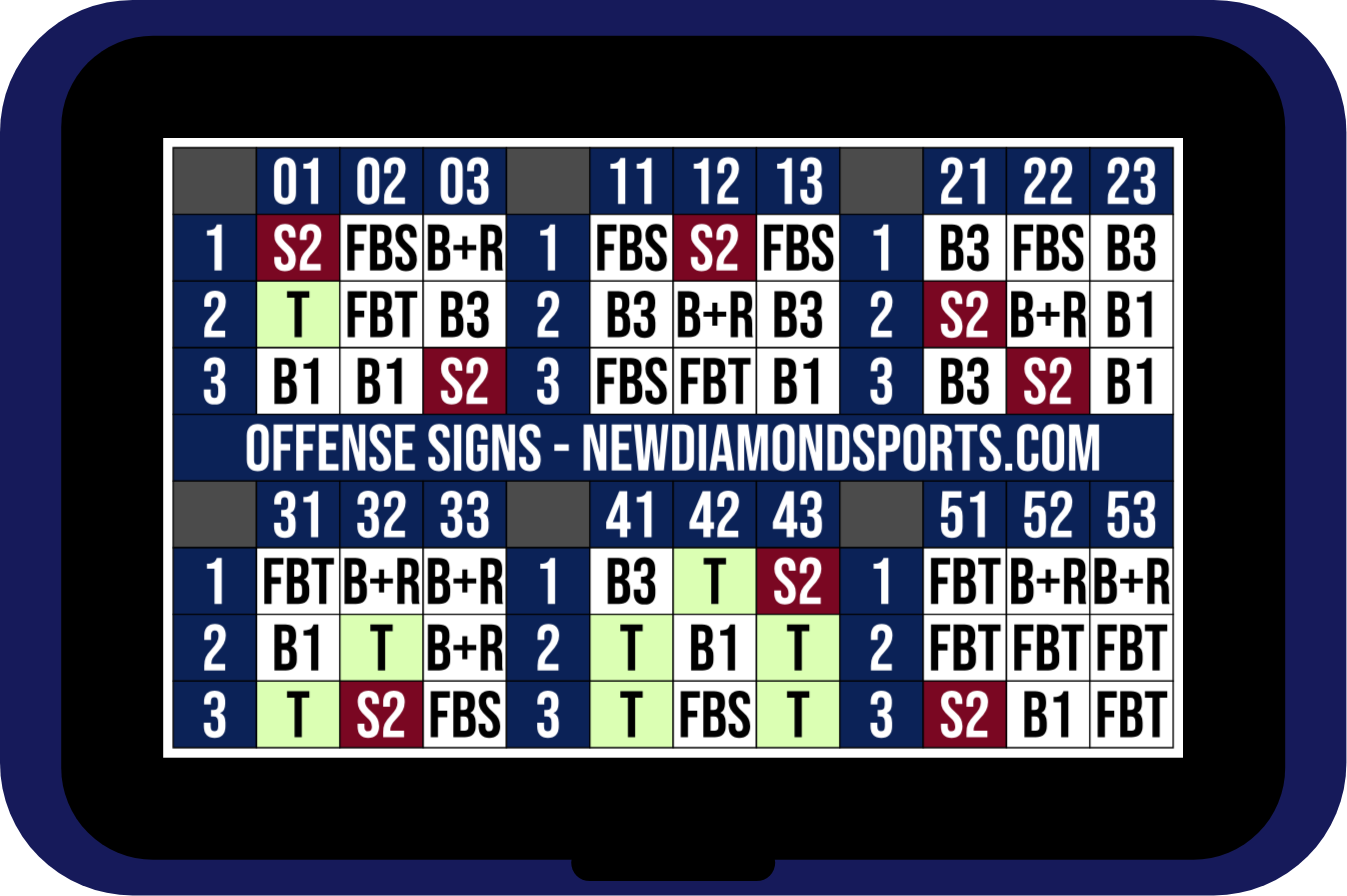
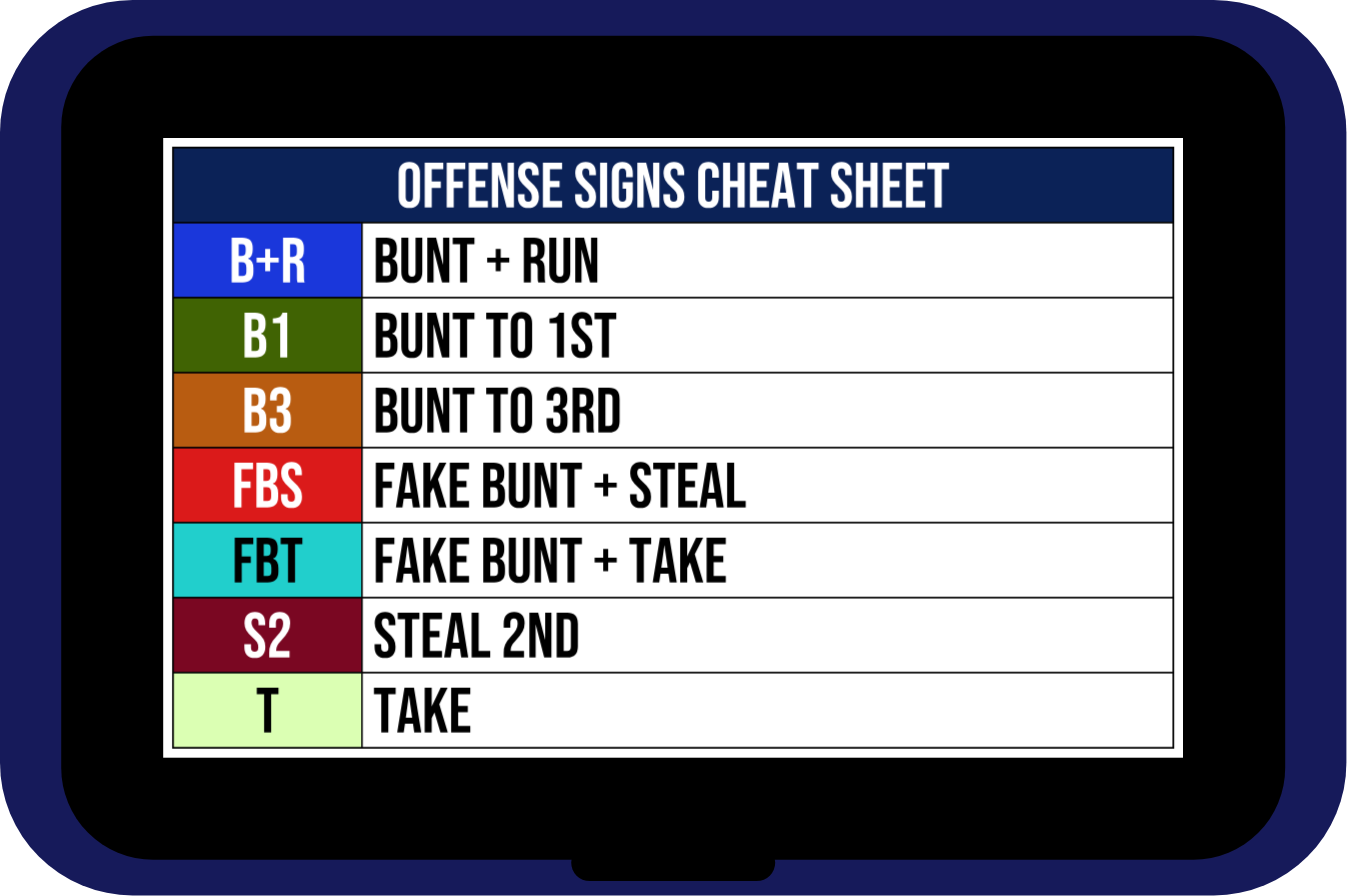
Coaches often keep the hot sign for one or two plays that need to be fast, such as the steal or the take, and use the indicator for the rest. On a wristband every call is hot in a sense. The number is the play, and changing the card changes every sign at once.
When to call it
- A hot sign for the steal that moves each inning: cap, then belt, then forearm.
- A young team that cannot yet read an indicator string reliably.
- One quick sign, like the take, that has to reach the batter before the pitcher comes set.
Put it on a card: Baseball and softball signs.
Sample wristband and cheat sheet
Frequently Asked Questions
What is the difference between a hot sign and an indicator?
An indicator only says the next sign counts. A hot sign is the play itself, whenever it is given, with no indicator needed.
How often should a hot sign change?
Many teams change it every inning, or tie it to the inning or the number of outs so players can work it out without a new sign. At the least, change it if you think the other team has read it.
More in the glossary
Start free. Upgrade when your season needs it.
The free plan includes one team and one of each document type, with no license fee and no credit card. Paid plans start at $2.50 a month billed annually, cancel anytime.
No credit card required. Free plan available.