
Glossary
Indicator sign
An indicator is the sign that tells a batter or runner the next sign is the real one. Every touch before it is a decoy, so the other team cannot read the call by watching the coach's hands.
A third base coach giving signs touches the cap, the arm, the belt and the chest, and most of those touches mean nothing. The indicator is the one that switches the system on. A team might make the bill of the cap its indicator, so a touch to the belt right after the cap is a steal, while a belt touch anywhere else in the string is noise. The batter and the runner watch for the indicator first and then read only the sign that follows it.
It works because it hides one real touch in a string of five or six. To steal the signs, the other dugout has to work out which touch is the indicator before any other sign can be read. Most teams also add a wipe-off, a touch that cancels everything given before it, and some move the indicator from inning to inning or have two of them.
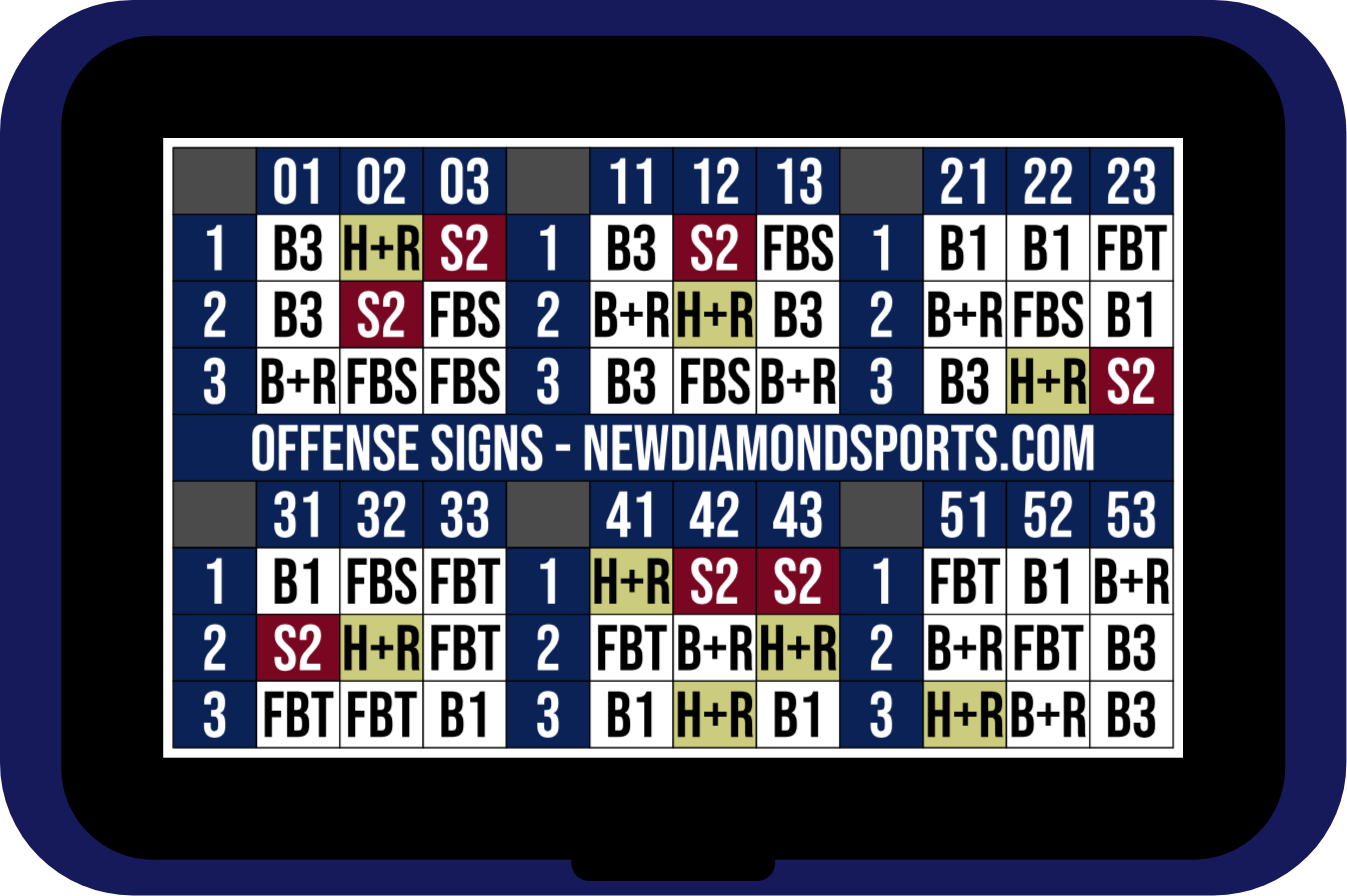
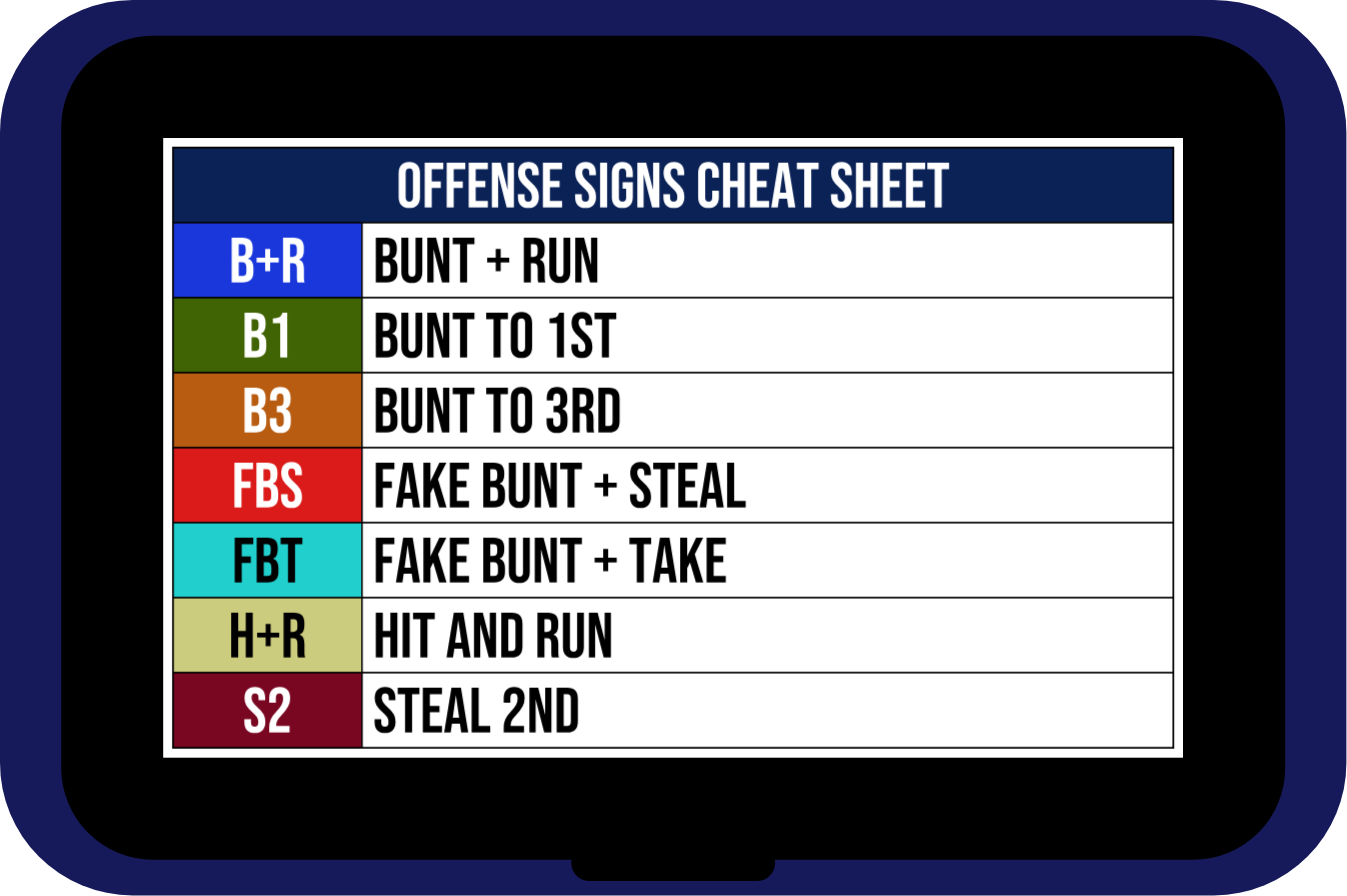
The weak spot is the coach. An indicator that is always the second touch, or always given with the same hand, gets spotted by the third inning. Varying how long the string is, and sometimes giving no indicator at all, keeps it hidden. A wristband skips the problem: the coach calls a number, the players read it off their cards, and there is no indicator to watch for.
When to call it
- Cap bill as the indicator: the touch right after it is the sign, and every other touch is a decoy.
- A new indicator each inning, or a different one with runners on base.
- With a young team, a single plain indicator so the players are not overloaded.
Put it on a card: Baseball and softball signs.
Sample wristband and cheat sheet
Frequently Asked Questions
What does an indicator mean in baseball signs?
It is the sign that says the next sign counts. The batter and runner wait for it, then read only the touch right after it. Every other touch in the string is a decoy.
Do you need an indicator if the team uses wristbands?
No. With a wristband, the coach calls a number and the players look it up, so there is no string of touches to decode. Some teams still keep a simple indicator for a few signs, like the take, that they give by hand.
More in the glossary
Start free. Upgrade when your season needs it.
The free plan includes one team and one of each document type, with no license fee and no credit card. Paid plans start at $2.50 a month billed annually, cancel anytime.
No credit card required. Free plan available.