
Glossary
Rise-curve
A rise-curve is a fastpitch softball pitch that moves up and across the plate at once, combining the riseball's backspin with the curveball's side spin, so it climbs away from a batter on the pitcher's own side.
The pitcher releases the rise-curve low, as for the riseball, with the spin tilted partly backward and partly to the side. The ball moves up through the zone and toward the pitcher's glove side together, so to a same-side batter it climbs and runs away, and to an opposite-side batter it climbs and runs in on the hands.
It is a pitch for the top corner of the zone and just past it. A batter who has seen the riseball expects the pitch to stay up, but not to move off the plate as well, and swings under it or reaches for it and pops it up. A rise-curve that neither rises nor breaks is a flat pitch at the belt, so it is thrown to the corner, never the middle, and usually with two strikes or when the pitcher is ahead.
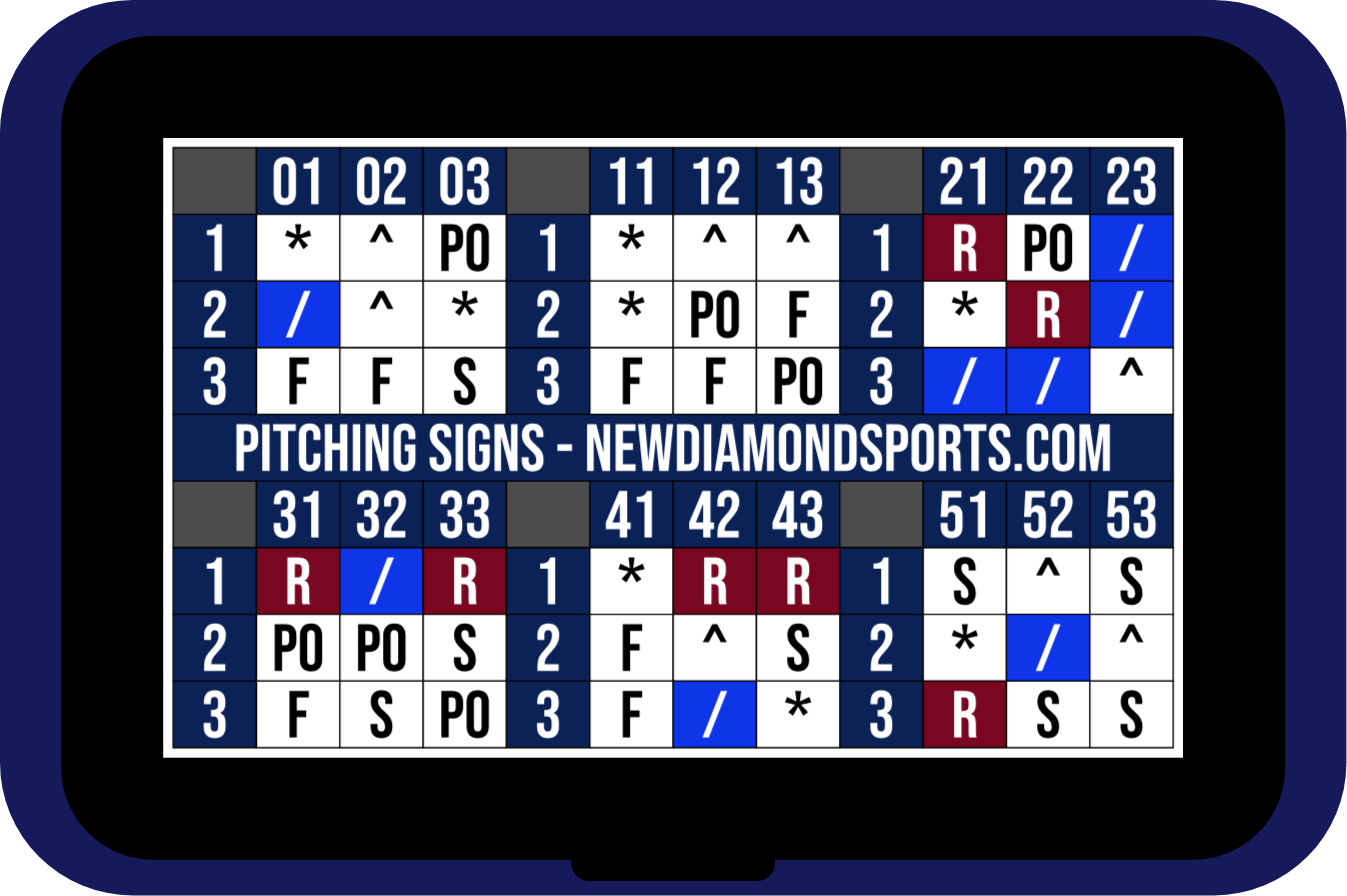
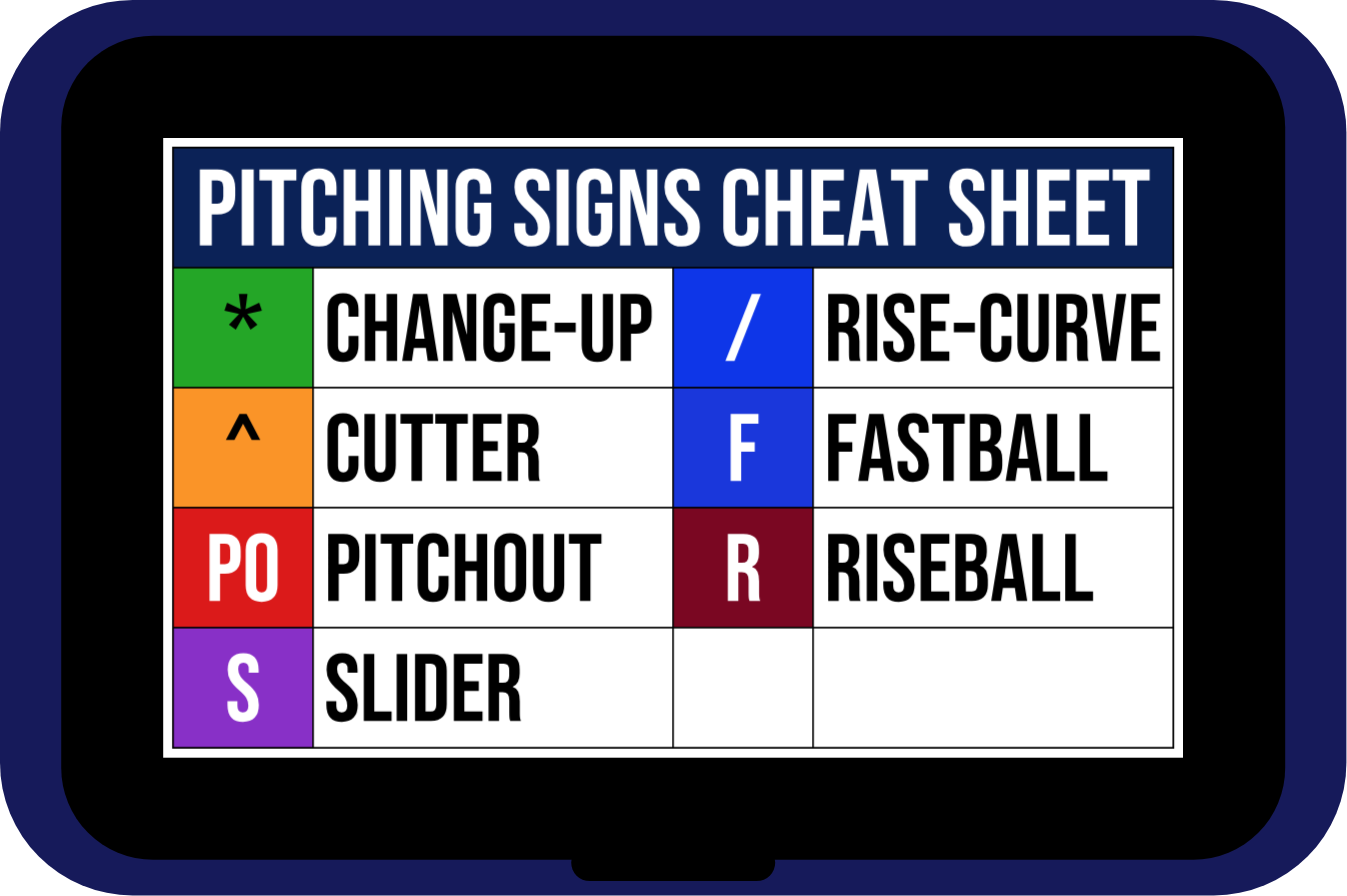
On a pitch calling card it is its own call beside the riseball and the drop-curve. The catcher sets up high and to the side for it, and keeping it apart from the straight riseball on the card means the catcher is never caught reaching the wrong way.
When to call it
- Two strikes on a same-side batter: up and away, above the zone.
- A hitter who has been on time for the straight riseball.
- After a drop-curve low and away, so the next pitch moves the other way up.
Put it on a card: Pitch calling cards.
Sample wristband and cheat sheet
Frequently Asked Questions
What is the difference between a riseball and a rise-curve?
A riseball moves mostly upward. A rise-curve also breaks sideways toward the pitcher's glove side, so it climbs and moves away from a batter on the pitcher's own side.
When should a pitcher learn the rise-curve?
Usually after the riseball and the curveball are both reliable, since it blends the two spins. It is an advanced pitch, more common in high school and travel ball than in younger leagues.
More in the glossary
Start free. Upgrade when your season needs it.
The free plan includes one team and one of each document type, with no license fee and no credit card. Paid plans start at $2.50 a month billed annually, cancel anytime.
No credit card required. Free plan available.