
Glossary
Change-up
A change-up is a slow pitch thrown with the same arm speed and motion as the fastball, so the batter reads fastball and swings too early.
The change-up works on timing, not movement. The pitcher holds the ball deeper in the hand or off the fingertips, often with a circle grip, which takes speed off the pitch while the arm comes through as hard as it does on a fastball. The batter sees the same motion, starts the swing on fastball time, and is out in front of a ball that has not arrived yet.
It is usually the second pitch a young pitcher learns, because it is easy on the arm and needs no wrist snap. In fastpitch softball it is just as important: a hitter set for a fast riseball or dropball is helpless against a change thrown with the same motion. A good change-up is about 10 to 15 percent slower than the pitcher's fastball, enough to throw off the timing without giving the pitch away.
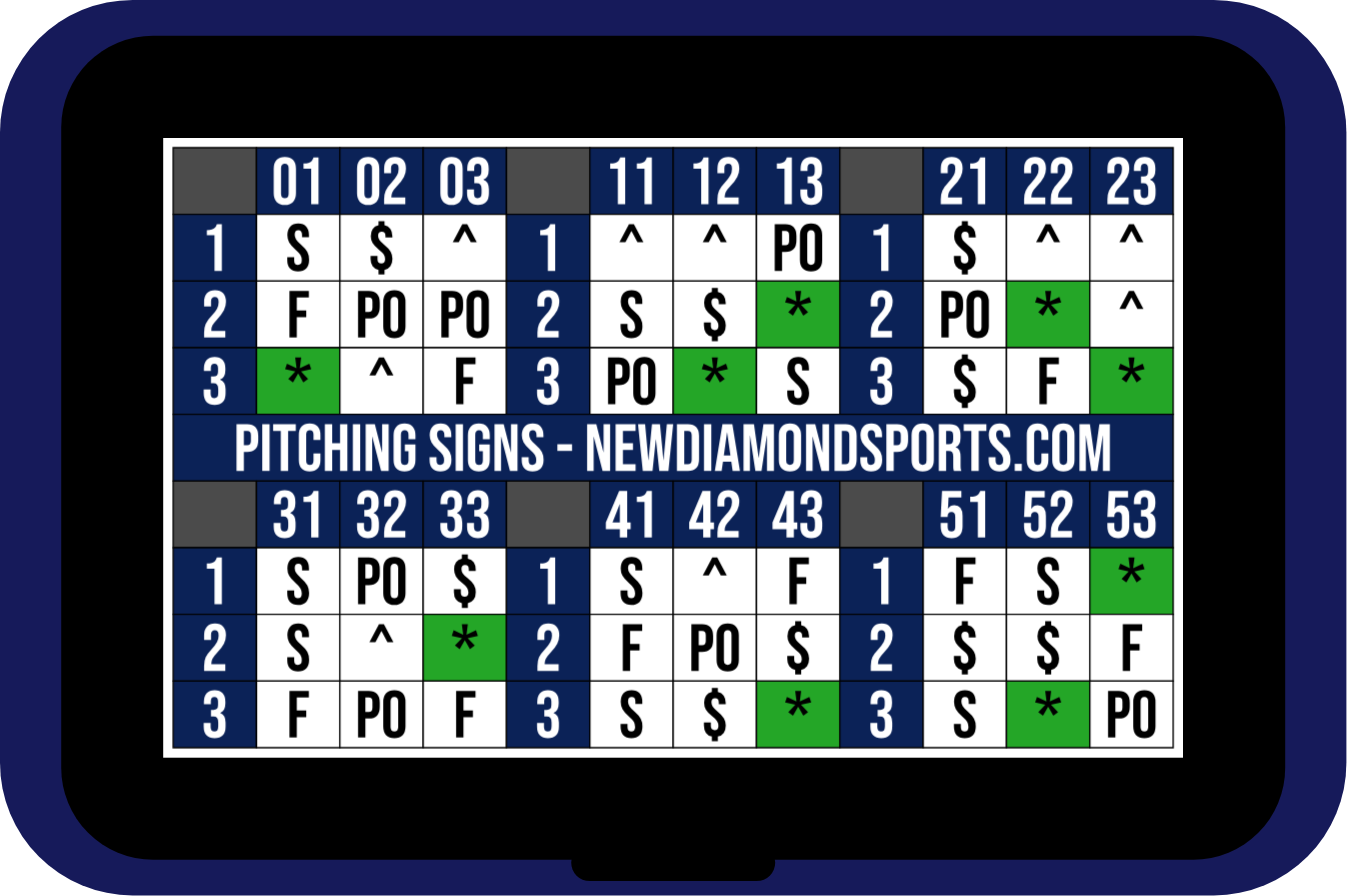
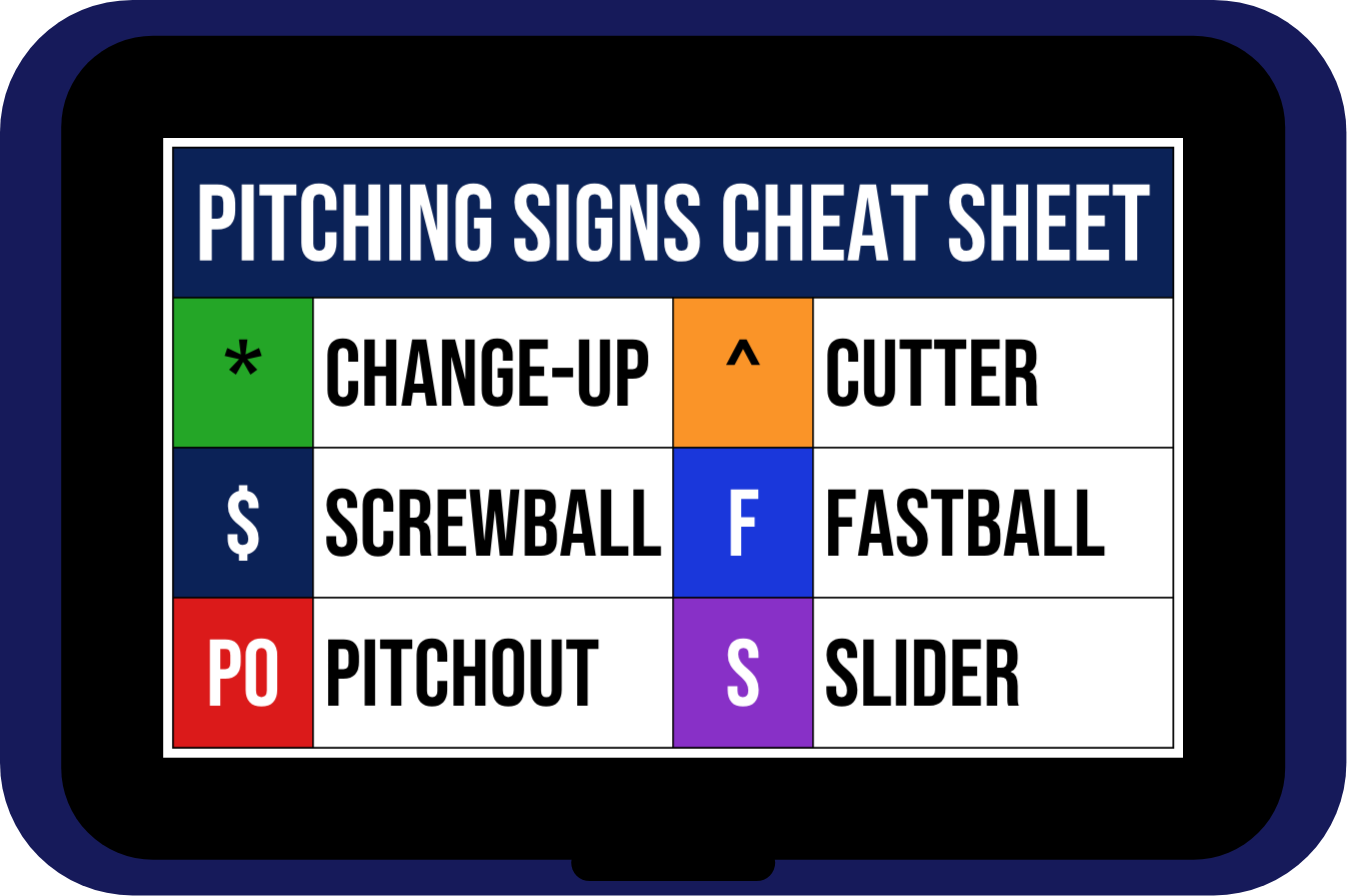
As a sign it is one of the pitch calls on the catcher's card or fingers. It is most often called after the batter has seen fastballs, in a count where the batter expects one, and down in the zone, where a hitter who is out in front rolls over it for a ground ball.
When to call it
- A batter who is on time for the fastball and fouling it straight back.
- A count the hitter expects a fastball in, such as 1-0 or 2-1.
- After two or three fastballs in a row, low in the zone.
Put it on a card: Pitch calling cards.
Sample wristband and cheat sheet
Frequently Asked Questions
How much slower should a change-up be than a fastball?
A common guide is about 10 to 15 percent slower. Much less and the batter's timing is not fooled; much more and the batter can read the slow pitch and wait for it.
What age should a pitcher learn a change-up?
Many coaches teach the change-up as the first pitch after the fastball, because it puts no extra strain on the elbow. Breaking balls usually wait until the pitcher is older.
More in the glossary
Start free. Upgrade when your season needs it.
The free plan includes one team and one of each document type, with no license fee and no credit card. Paid plans start at $2.50 a month billed annually, cancel anytime.
No credit card required. Free plan available.