
Glossary
Pitch signs
Pitch signs are the signals the catcher, or a coach through the catcher, gives the pitcher before each pitch to say which pitch to throw and where.
Before every pitch the catcher crouches and shows the pitcher a sign between the thighs, hidden from the base coaches and the other dugout. The basic system is a number of fingers for the pitch, one for the fastball and two for the curveball for example, and a tap on the inside or outside thigh for the location. The pitcher can shake it off and wait for the next one.
With nobody on base or with a runner only on first, a single sign is usually enough: none of the runners can see the catcher's hand. A runner on second can, so teams switch to a sequence. The catcher shows several signs and only one of them counts, such as the second sign, or the sign after the first fastball. The pitcher and catcher agree on the sequence before the game and can change it between innings.
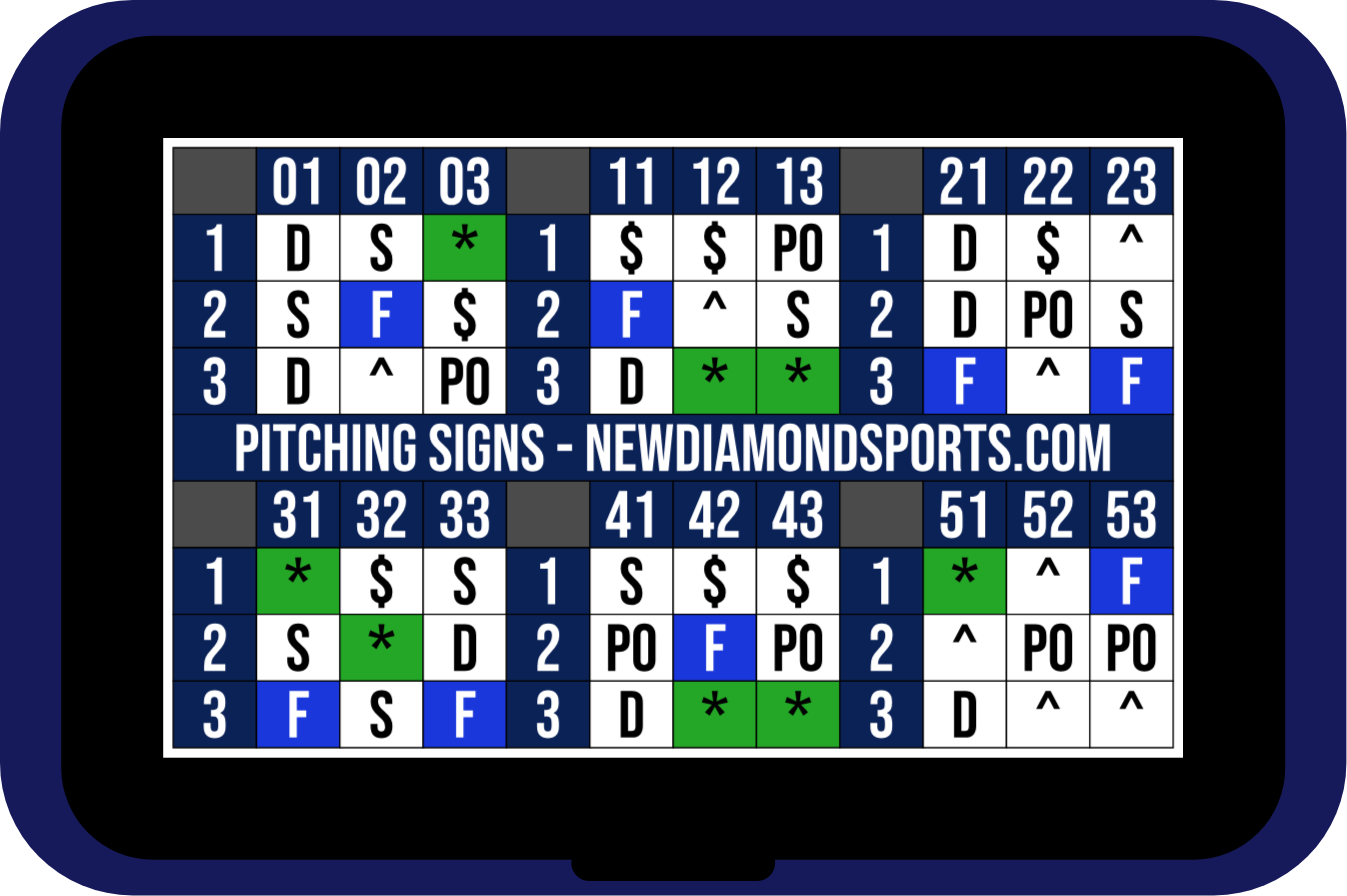
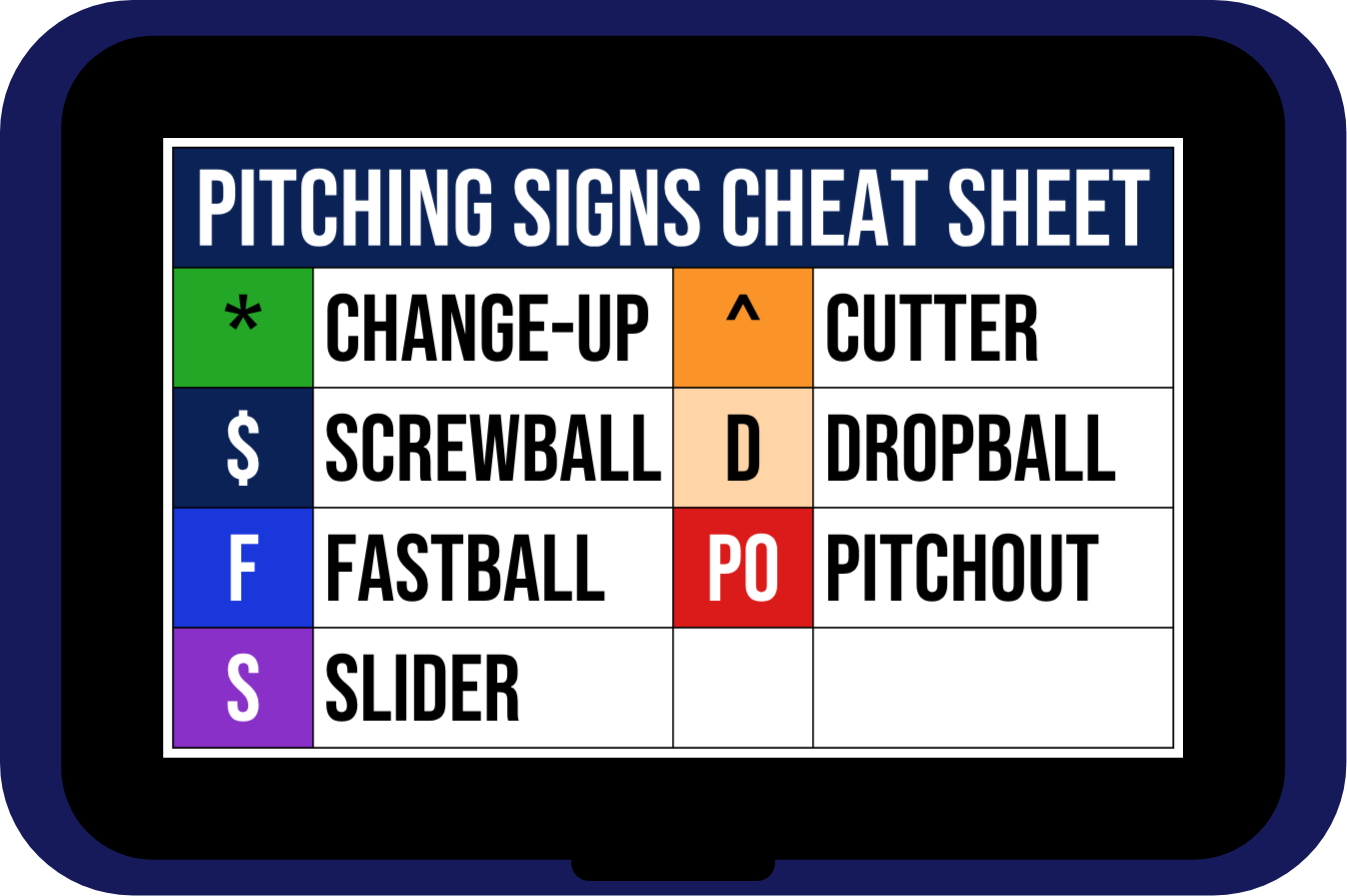
Many teams now take the signs off the catcher's fingers entirely. The coach in the dugout calls a number, the catcher reads it on a pitch calling wristband and passes it on, or the pitcher wears a matching card and reads the same number. Changing the card between games, or between innings, changes every sign at once, and a runner on second learns nothing by watching.
When to call it
- Nobody on: one sign, the number of fingers for the pitch and a thigh tap for the location.
- A runner on second: a sequence, such as the second sign shown, so the runner cannot pass the pitch to the batter.
- A coach who calls pitches from the dugout: a number read off the catcher's wristband card.
Put it on a card: Pitch calling cards.
Sample wristband and cheat sheet
Frequently Asked Questions
Why do catchers change signs with a runner on second?
A runner on second can see the catcher's hand. If the signs are simple, the runner can read the pitch and signal it to the batter, so teams switch to a sequence in which only one of several signs is the real one.
Who calls the pitches, the catcher or the coach?
Either. Older and experienced catchers often call their own game. Many youth, high school and college coaches call pitches from the dugout and send them to the catcher by hand signal or a number on a pitch calling card.
More in the glossary
Start free. Upgrade when your season needs it.
The free plan includes one team and one of each document type, with no license fee and no credit card. Paid plans start at $2.50 a month billed annually, cancel anytime.
No credit card required. Free plan available.