
Glossary
Slider
A slider is a baseball breaking pitch thrown harder than a curveball, with spin to the side, so it breaks late and short across the plate away from a same-handed batter.
The slider sits between the fastball and the curveball. The pitcher holds it a little off center and lets it come off the side of the index finger, so the ball spins more like a bullet or a tilted wheel than the curve's forward roll. It comes in a few miles an hour slower than the fastball and looks like one until the last few feet, when it slides toward the pitcher's glove side and a little down.
Its value is how late it moves. A right-handed batter facing a right-handed pitcher sees a pitch on the outside corner that ends off the plate, and swings over or past it. Thrown back-foot to an opposite-handed batter, it breaks in at the knees. A slider left over the middle with no break is a hittable fastball with less speed, so it is aimed at the edge of the zone or just past it.
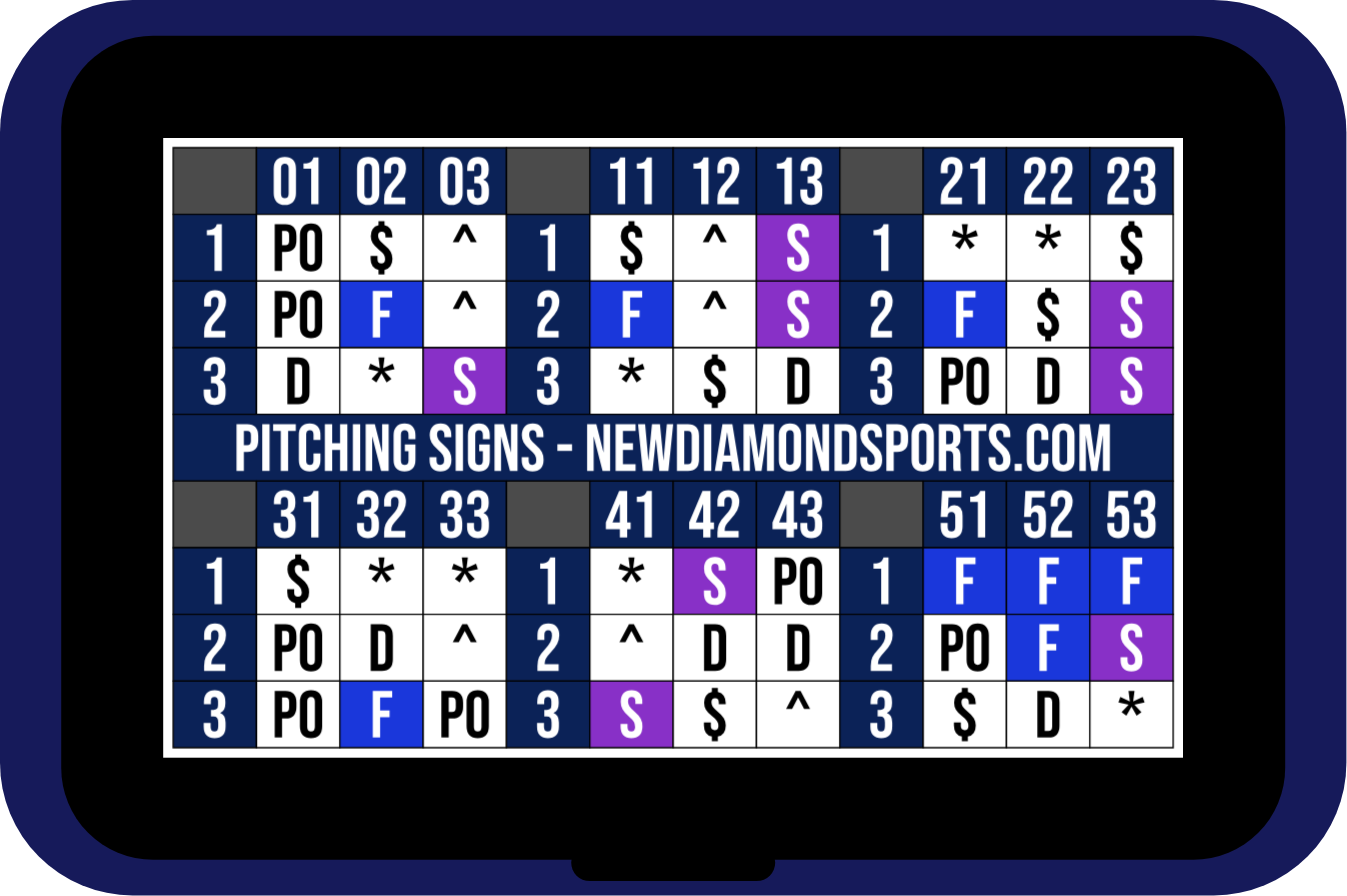
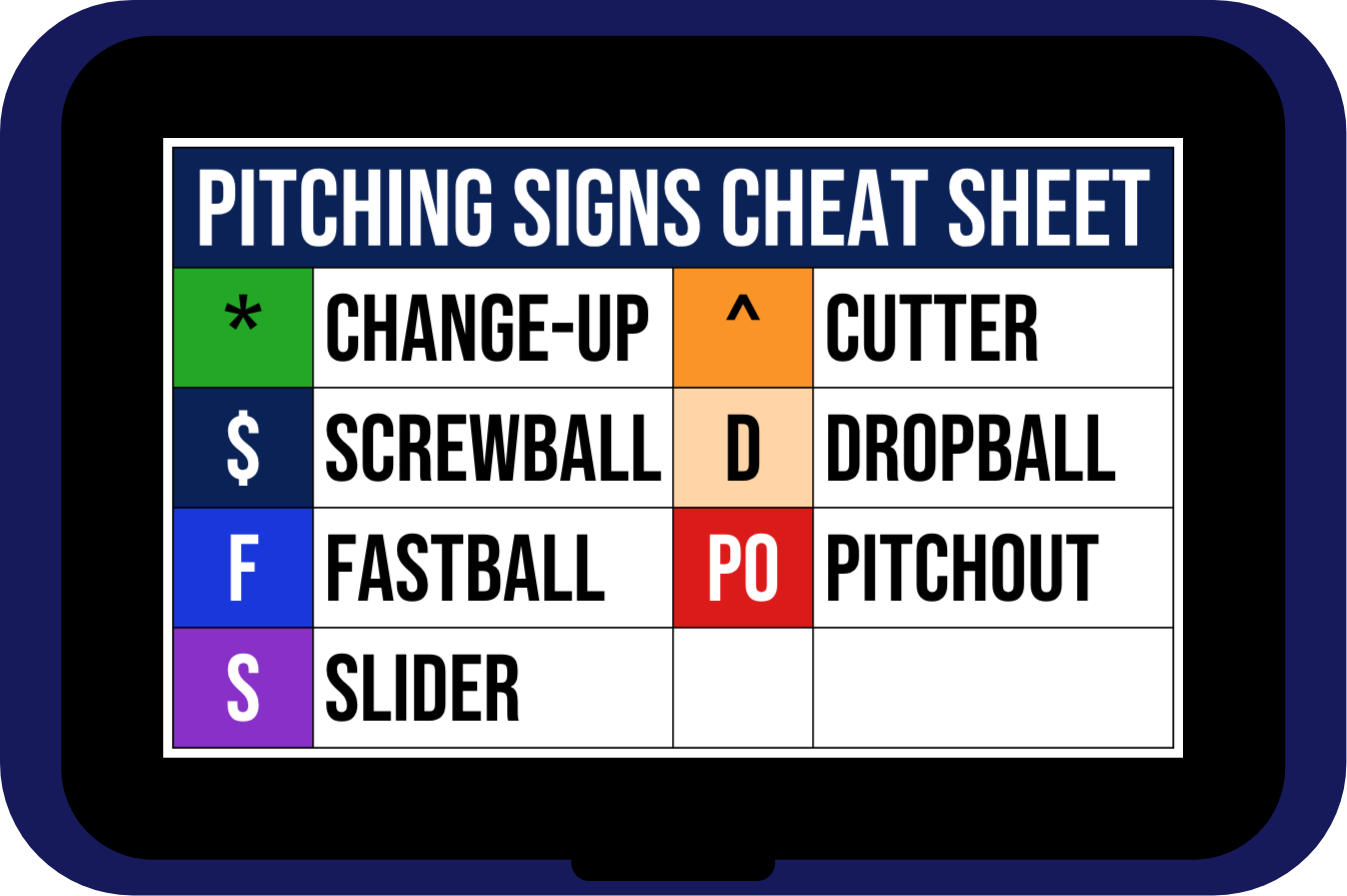
As a sign it is its own call on the catcher's fingers, often three, and its own number on a pitch calling card. Teams that throw both breaking balls keep them as separate calls, because the catcher sets up and blocks them differently: the curve is more likely to bounce in front of the plate, the slider to sail to the glove side.
When to call it
- Two strikes on a same-handed batter: a slider that starts on the outside corner and ends off it.
- A batter who is late on the fastball, who cannot also adjust to a pitch that moves at the last moment.
- Back-foot to an opposite-handed hitter, breaking in at the knees.
Put it on a card: Pitch calling cards.
Sample wristband and cheat sheet
Frequently Asked Questions
Is a slider harder on the arm than a curveball?
There is no settled answer. Coaches disagree, and studies of pitching mechanics have not shown either breaking ball to be clearly worse than the other for an adult pitcher. For young pitchers, most guidance puts both off until the fastball and change-up are well learned.
What is the difference between a slider and a cutter?
A cutter is thrown almost as hard as the fastball and moves only a few inches to the glove side. A slider is slower and breaks more, both sideways and down.
More in the glossary
Start free. Upgrade when your season needs it.
The free plan includes one team and one of each document type, with no license fee and no credit card. Paid plans start at $2.50 a month billed annually, cancel anytime.
No credit card required. Free plan available.